Where to start
Tool storage ideas, in the order that actually pays off
Not a gallery of other people's garages. A sequence: what to fix first, what each format is genuinely good at, and the published numbers that decide which one your problem needs.

Do it in this order, because it is the order of value per dollar: liner and trays inside what you already own, then the wall (pegboard or shelving for what you reach for daily), then small parts on the wall, then a chest or cabinet if the volume genuinely needs one. Most people start at the end and wonder why the box filled up.
The mistake this page exists to prevent
The instinct when a garage gets out of hand is to buy a big box. It is satisfying, it is expensive, and it frequently does not fix the problem - because the problem is usually not capacity, it is that everything lives in one undifferentiated pile and the pile has simply moved into drawers.
So this is a sequence rather than a shopping list, and the early steps cost almost nothing. Work through them in order and you will know whether you actually need the big box before you buy it, which is a considerably better position than finding out afterwards.
1. Fix the inside of what you already own
Ten minutes and one roll of drawer liner does an entire box: tools stop sliding when a full-extension drawer opens, the rattle stops, and the drawer paint survives. Then socket trays for the drawer with sockets in it, because sockets roll, nest and look identical from above - three problems one tray fixes.
This step is first because it is nearly free and because it changes how the rest of the sequence looks. A box you can work out of might be enough box.
2. Put the daily tools on the wall
The tools you touch every session should not be in a drawer at all - they should be at arm's length, visible, above the bench. This is what pegboard is genuinely good at, and it is worth choosing a version that publishes what it holds.
| Load | Published limit (Wall Control 20 ga steel) |
|---|---|
| Per panel, into drywall with included anchors | Up to 100 lb |
| Per panel, into studs | Up to 200 lb |
| Per shelf assembly, evenly distributed | 10-20 lb |
| Per hook engaging two slots | 10-15 lb |
| Per hook engaging a single slot | 5-10 lb |
| Per plastic bin | 2 lb |
Published by Wall Control for its metal panels. It is more disclosure than most tool chests offer, and the 2 lb bin limit in particular is one people meet without noticing.
Note what those numbers rule out: pegboard is for hand tools, not for anything heavy. The full comparison against a chest covers where the line falls.
3. Get the small parts off the bench
Fasteners are the last thing anyone sorts and the first thing that wastes an hour. A multi-drawer cabinet on keyhole slots above the bench costs two screws and gives you the bench back - the Akro-Mils publishes 64 drawers at 6 x 2-1/4 x 1-5/8 in each in a 20 x 6 x 16 in footprint.
Label as you fill it. Sixty-four unlabeled drawers is genuinely worse than a jar. The full breakdown of the three parts-storage formats.
The four things those first three steps need
Everything above is a method rather than a shopping list, but the first three steps do need four specific things. They are cheap, they are the whole of the early sequence, and none of them is the big box.
Quick picks
Ranked on published specifications, not on hype. The key number is the figure that decides each pick, quoted from the maker. Tap a row for the full write-up, or go straight to the listing.
| # | Product | Best for | Key number | Price |
|---|---|---|---|---|
| 1 | 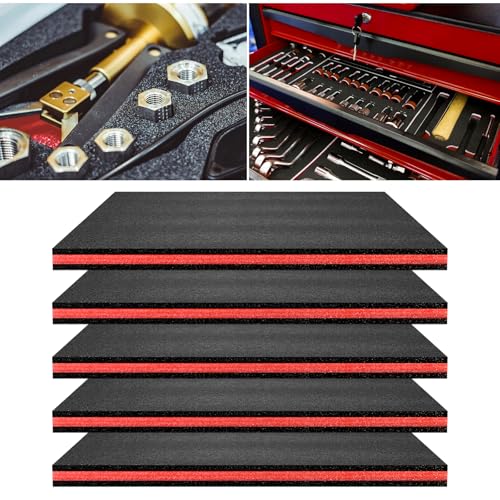 Drawer liner rollNot as good as foam and about a tenth of the effort. A liner stops the sliding and the metal-on-metal noise, and it takes ten minutes for a whole box. | The cheapest fix for sliding tools | Rollcut per drawer | $27.99 · Check on Amazon-15% |
| 2 |  Wall Control metal pegboard20-gauge steel rather than hardboard, and Wall Control publishes the load limits panel by panel and hook by hook - which is more honest disclosure than most tool chests manage. | Pegboard that publishes what it holds | 20 gasteel panel | $38.99 · Check on Amazon |
| 3 |  Akro-Mils 64-drawerSixty-four clear drawers in a 20 by 6 by 16 inch box that stacks and wall-mounts. It is the cheapest thing on this site that removes an entire category of searching, and the drawers divide again if 64 is not enough. | Fasteners, sorted once and then forgotten | 64drawers | $50.99 · Check on Amazon |
| 4 | 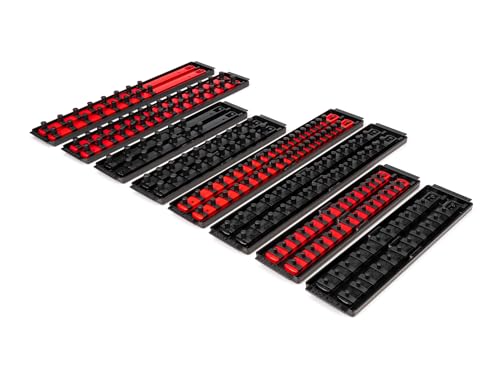 TEKTON socket rail and tray setSockets are the single worst-behaved item in a tool drawer: they roll, they nest, and they all look alike. Rails and trays fix all three, and covering all three drive sizes in one set is what stops the odd drive ending up loose. | Sockets, which are the worst thing in any drawer | 3 drives1/4, 3/8, 1/2 in | $140.00 · Check on Amazon |
Every key number is a figure the manufacturer publishes. Where a maker publishes none, the row says so rather than substituting an estimate of ours.
Top pick · The cheapest fix for sliding tools
Tool Box Drawer Liner Roll
Not as good as foam and about a tenth of the effort. A liner stops the sliding and the metal-on-metal noise, and it takes ten minutes for a whole box.
- Body steel
- Not published
- Per drawer
- Not published
- Storage
- Not published
- Empty weight
- Not published
What works
- Ten minutes for an entire box, versus an afternoon for foam
- Stops tools rattling into the drawer front on every close
- Protects the drawer paint, which matters at resale
What does not
- Does nothing to show you a tool is missing
- Tools still move in a drawer that is not full
- Cheap liner compresses and goes shiny under heavy sockets
| Published specification | |
|---|---|
| Type | Non-slip drawer liner, sold by the roll |
| Use | Cut to the drawer floor; no adhesive needed |
| Where it is sold | Amazon, plus other retailers |
Who it is for
Everyone, on day one, before deciding about foam.
What it is not for
Anyone who wants an inventory at a glance - that is foam's job.
Sources for this entry
2 · Pegboard that publishes what it holds
Wall Control Galvanized Metal Pegboard Panel, 32 x 16 in.
20-gauge steel rather than hardboard, and Wall Control publishes the load limits panel by panel and hook by hook - which is more honest disclosure than most tool chests manage.
- Body steel
- 20 ga0.0359 in (0.91 mm)
- Per drawer
- Not published
- Storage
- Not published
- Empty weight
- Not published
What works
- Published load limits for the panel, the hooks, the shelves and the bins - nobody else in this category does that
- 20-gauge steel, which the maker states is over ten times stronger than conventional pegboard
- Takes standard 1/4 in pegs as well as its own slotted accessories, so existing hooks are not wasted
- Steel does not blow out around a hole the way hardboard does when a hook is loaded
What does not
- 100 lb per panel into drywall is the realistic ceiling, and it is easy to exceed with hand tools
- 2 lb per plastic bin is a genuine limit - a bin of fasteners passes it quickly
- A 32 x 16 panel does not go far; a useful wall is several of them
- Everything on it is exposed to dust, and in a damp garage that means surface rust
| Published specification | |
|---|---|
| Panel | 32 in x 16 in, 20-gauge galvanized steel |
| Panel capacity | Up to 100 lb into drywall with the included anchors; up to 200 lb into studs |
| Shelf assemblies | 10-20 lb each, evenly distributed |
| Hooks | 10-15 lb for a two-slot hook; 5-10 lb for a single-slot hook |
| Plastic bins | 2 lb each |
| Compatibility | Accepts 1/4 in pegboard pegs and Wall Control slotted accessories |
| Where it is sold | Amazon, plus other retailers |
Who it is for
The tools you reach for constantly, kept visible at arm's length above a bench.
What it is not for
Heavy tools, anything you want protected from dust, or a wall without studs.
3 · Fasteners, sorted once and then forgotten
Akro-Mils 64-Drawer Small Parts Storage Cabinet (10164)
Sixty-four clear drawers in a 20 by 6 by 16 inch box that stacks and wall-mounts. It is the cheapest thing on this site that removes an entire category of searching, and the drawers divide again if 64 is not enough.
- Body steel
- Not published
- Per drawer
- Not published
- Storage
- Not published
- Empty weight
- Not published
What works
- Clear drawers mean you identify the contents without opening anything
- Dividers included, so a drawer becomes two or three when a size needs splitting
- Wall-mounts on keyhole slots, which keeps 64 drawers off your bench entirely
- Rear stop tabs are the small detail that stops a pulled drawer dumping washers behind the unit
What does not
- Plastic drawers flex and can crack if you overfill them with dense hardware
- 6 x 2-1/4 x 1-5/8 in per drawer is small: this is fasteners and terminals, not tools
- No published load rating for the cabinet or the drawers
- Sixty-four unlabeled drawers is worse than no system - budget an hour for labeling
| Published specification | |
|---|---|
| Dimensions | 20 in W x 6 in D x 16 in H |
| Drawers | 64, external drawer size 6 x 2-1/4 x 1-5/8 in |
| Dividers | 8 small crosswise and 4 large lengthwise included |
| Material | High-impact plastic; clarified polypropylene drawers |
| Mounting | Stacks securely; wall-mountable via keyhole slots |
| Detail | Rear stop tabs stop contents spilling out the back |
| Where it is sold | Amazon, plus other retailers |
Who it is for
Screws, nuts, washers, terminals, fuses, o-rings - anything you buy in a bag of 100.
What it is not for
Tools of any size, and anything heavy enough to bow a plastic drawer.
4 · Sockets, which are the worst thing in any drawer
TEKTON 1/4, 3/8, 1/2 in. Drive Socket Rail and Tray Set (OST97902)
Sockets are the single worst-behaved item in a tool drawer: they roll, they nest, and they all look alike. Rails and trays fix all three, and covering all three drive sizes in one set is what stops the odd drive ending up loose.
- Body steel
- Not published
- Per drawer
- Not published
- Storage
- Not published
- Empty weight
- Not published
What works
- Sockets stop rolling, which is most of the noise a tool box makes
- Size order means you stop grabbing the wrong one twice
- Covers all three drive sizes, so no drive is left loose in the drawer
- Lift a rail out and take it to the work
What does not
- Trays waste drawer height compared with foam pockets
- Deep sockets often do not fit a tray sized for shallow ones
- Metric and imperial in one drawer still needs labels
- A branded set costs several times what an unbranded rail set does
| Published specification | |
|---|---|
| Type | Socket rail and tray set |
| Drives | 1/4, 3/8 and 1/2 in |
| Use | Sits in the drawer; sockets stand in size order |
| Where it is sold | Amazon, plus other retailers |
Who it is for
Anyone with more than one socket set in one drawer.
What it is not for
A drawer where every millimeter of depth is spoken for.
Sources for this entry
4. Only now, decide what box you need
By this point you know what is left over, which is the only sound basis for choosing. Broadly:
- Lots of hand tools, sockets and wrenches - that is a tool chest problem. Deep drawers on rated slides.
- Power tool cases, pails, consumables, cordless kits - that is a storage cabinet problem. Doors and shelves.
- Tools that leave the garage - that is a modular system or a portable box.
- Nowhere to work - that is a bench, and it is a different purchase from storage.
5. The habits, which cost nothing
- Frequency decides height. Daily tools at hand height; everything else radiates outward from there. Not by category - by how often you reach for it.
- Weight decides depth. Heaviest in the lowest drawers. The better cabinets run dual slides down there precisely because that is where the maker expected the weight.
- One drawer, one job. The drawer that holds sockets and also whatever did not fit becomes the whatever-did-not-fit drawer.
- Keep one drawer deliberately empty. It is where a job in progress lives, and without it an in-progress job spreads across the bench and the floor.
- Put it away at the end, not the start. The tool left on the bench overnight is the one that is missing next week.
And the one maintenance job people skip
A closed steel box in an unheated garage collects condensation - warm damp air enters during the day, the space cools overnight, and moisture lands on the coldest metal inside, which is your tools. A vapor-corrosion inhibitor per drawer costs a few dollars and prevents it. The full explanation.
What this sequence is really doing
Each step removes a category of thing from the pile, and it does the cheap removals first. By the time you get to the expensive purchase you are buying for what is genuinely left rather than for the whole undifferentiated problem - which is usually a smaller, better-specified box than the one you would have bought on day one.
It is also the order that survives. A garage organized by buying one large thing reverts within a year. A garage organized by removing categories one at a time tends to stay that way, because each thing has somewhere it obviously belongs. When the pile that is left is boxes and bulky items rather than tools, that is a garage shelving problem, not a tool storage one.
Common questions
What is the best way to store tools in a garage?
In this order: fix the inside of what you own with liner and trays, put daily tools on the wall where you can see them, get small parts off the bench into a wall-mounted drawer cabinet, and only then decide what box the remainder needs. Most people start with the box.
How much weight can pegboard hold?
Wall Control publishes up to 100 lb per 20-gauge steel panel into drywall with the included anchors, up to 200 lb into studs, 10-15 lb per two-slot hook, 5-10 lb per single-slot hook and 2 lb per plastic bin. Traditional hardboard pegboard holds considerably less.
Should tools be stored on the wall or in a chest?
Both, for different tools. The wall is for what you touch every session - visible, at arm's length, and limited to hand-tool weights. A chest is for everything else, and for anything heavy enough that a hook rating matters. The comparison.
Where should heavy tools go in a tool chest?
The lowest drawers, always. It keeps a loaded box from being top-heavy when it rolls, and the deep bottom drawers on better cabinets run dual slides because that is where the maker expected the weight to go.
Sources
Read next
The best power tool organizers, and the load ratings that are not comparable
Cordless drill and power tool wall racks compared on the load figures they publish - a rack total, a per-unit load and a per-hook maximum, which are three different claims.
Garage slatwall, and the load rating nobody in the category publishes
Garage slatwall compared against metal pegboard on the figures that exist - continuous channels and real basket support, against four published load limits it cannot match.
The best garage shelving, and the number that changes when you add wheels
Five garage shelving units compared on published per-shelf load, depth and certification - including the rating that drops eightfold on wheels.
The best pegboard for a garage, judged on what it is rated to hold
Metal pegboard compared on published gauge and load limits - 18 gauge against 20, square holes against round, and what a hook is actually rated for.
The best magnetic tool holders, and why the pull ratings disagree
Magnetic bars, toothed rails and slotted holders compared - plus the published pull rating that two sources quote twenty-four times apart.
How to organize a tool chest, in the order that works
Frequency decides the height, weight decides the depth, and the buying order that puts foam last for a reason.
Small parts organizers, and the one that suits how you work
Parts cabinets, sealed bin organizers and tray inserts - three formats for three different problems, compared on published compartment size.
Tool chest vs pegboard, and the hook rating nobody checks
120 lb a drawer against 15 lb a hook - the published limits that show these two formats are not competing for the same tools.
Drawer liner: ten minutes, the whole box, do it on day one
The cheapest and first upgrade for any new chest: what sliding actually costs, and how to line a whole box in ten minutes.
The best tool chests, ranked on what the maker actually publishes
The flagship roundup: chests and cabinets ranked on published gauge, slide ratings and volume, with three things we would actively skip.