The other format
Tool storage cabinets, for everything a drawer cannot hold
A drawer chest is the wrong shape for a circular saw in its case, a five-gallon pail, or a stack of cordless kits. This is the other half of a garage, and it is judged on completely different numbers.
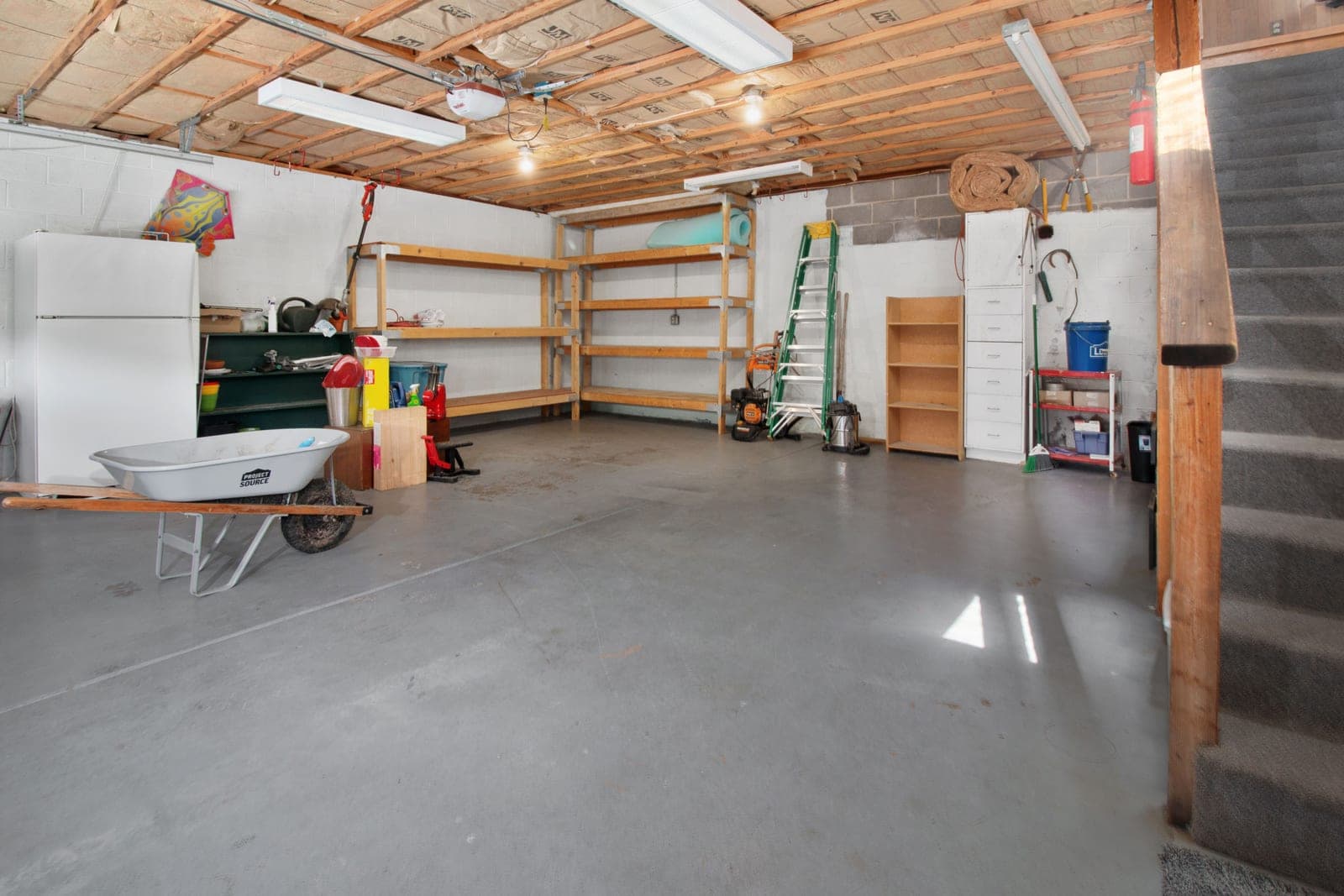
Judge a storage cabinet on published per-shelf capacity, shelf adjustability and depth - not on gauge, which almost none of them publish. The Seville Classics UltraHD 48 in. is the pick because it publishes all of it: 800 lb total, 150 lb per adjustable shelf, 350 lb on the bottom shelf, 132 lb empty. For a wall where floor space is the scarce thing, a wall-hung unit at 40 lb a shelf is a different tool for a different job.
Why this is a separate purchase, not a smaller one
Every page on this site up to now has been about drawers. Drawers are superb at one thing: holding many small objects where you can see all of them at once. They are poor at almost everything else, and a garage is full of everything else.
A circular saw in its case is 18 inches long and 6 inches tall. A five-gallon pail of degreaser does not go in a drawer at all. A stack of cordless kits in blow-molded cases, a box of shop rags, a coil of extension cord, a helmet, a jack - none of that is a drawer problem, and trying to make a tool chest solve it is how people end up with a chest they cannot close and a floor they cannot walk across.
So the honest framing is that a chest and a cabinet are complements, not alternatives. The chest holds the tools. The cabinet holds the things the tools come in and the things you use them with.
The numbers are completely different, and that catches people out
If you have read the gauge page or the drawer arithmetic, the instinct is to apply the same tests here. Do not - the specs that decide a chest barely apply to a cabinet.
| Tool chest | Storage cabinet | Why the difference |
|---|---|---|
| Body steel gauge | Rarely published at all | A cabinet's load goes into shelves and a frame, not into panels resisting racking. Most makers do not print a gauge and the ones who do are in the 22-24 range |
| Drawer slide rating, per pair | Per-shelf capacity | Same job, different component. It is the number that decides what the thing holds |
| Full extension versus three-quarter | Shelf adjustability and increment | The equivalent flexibility spec. A fixed shelf is the cabinet version of a three-quarter slide |
| Caster count and diameter | Leveling feet, or casters sold separately | Most cabinets are meant to stand still, so leveling on an uneven slab replaces rolling |
| Storage volume in cubic inches | Interior dimensions | Cabinets publish an interior W x D x H, which is more useful anyway - you are fitting specific objects, not pouring in loose tools |
The one spec that carries straight across is depth. Eighteen inches against 24 decides what fits and how much walkway you keep, on a chest and on a cabinet alike.
22 gauge is 0.0299 in, and that is fine here
Sandusky publishes 22-gauge steel across its line and NewAge publishes 24 gauge, which are both thinner than any tool chest we would recommend. That is not a defect - a cabinet panel is a skin around a shelf structure, where a chest panel is carrying several hundred pounds of loaded drawers and resisting racking as the box rolls. Do not carry the gauge standard across from the chest pages; judge a cabinet on its shelves.
Quick picks
Ranked on published specifications, not on hype. The key number is the figure that decides each pick, quoted from the maker. Tap a row for the full write-up, or go straight to the listing.
| # | Product | Best for | Key number | Price |
|---|---|---|---|---|
| 1 | Seville ClassicsNo photo Seville UltraHD 48 in.The only cabinet here that publishes a total capacity, a per-shelf capacity, a separate bottom-shelf capacity and its own empty weight. 800 lb across three 150 lb adjustable shelves and a 350 lb bottom, at 132 lb empty. | The cabinet that publishes every number | 800 lbtotal capacity | Check price on Amazon |
| 2 |  Sandusky Value Line 30 in.A plain welded-steel cabinet with a locking handle and three shelves, and the honest caveat is in the specification: the listing publishes a 150 lb capacity without saying whether that is per shelf or for the whole cabinet, and the shelves are fixed rather than adjustable. | A locking steel cabinet at the narrow end | 150 lbpublished capacity | $348.74 · Check on Amazon |
| 3 |  Sandusky Classic 36 in.The narrow, shallow welded option: 36 wide and only 18 deep, with four shelves on 2-inch centers and a three-point door lock. Eighteen inches is the difference between a cabinet you walk past and one you edge around. | A welded cabinet that fits a narrow wall | 18 indepth | $454.99 · Check on Amazon |
| 4 |  NewAge Bold 9-piece setA system rather than a cabinet: wall units, base units, lockers and a worktop that line up because they were designed to. NewAge publishes a capacity for each type - 800 lb lockers, 600 lb base cabinets at 200 lb a shelf, 100 lb wall cabinets - and that last number is the one to plan around. | Doing the whole wall in one purchase | 24 gawelded steel frames | $1,899.99 · Check on Amazon |
| 5 |  Gladiator wall GearBoxWall-hung, so the floor underneath stays usable - which in a single-car garage is worth more than capacity. Gladiator publishes 150 lb per unit and 40 lb per shelf, and that 40 is the number that decides what this is for. | Getting things off the floor entirely | 40 lbper shelf | $186.99 · Check on Amazon-15% |
| 6 |  Sandusky Value Line 36 in.150 lb a shelf is a real figure and a good one at this price. The catch is in the name of the spec: the shelves are FIXED, so the cabinet stores what fits the spacing it came with and nothing taller. | The cheapest cabinet that still publishes a number | 150 lbper fixed shelf | $379.00 · Check on Amazon |
Every key number is a figure the manufacturer publishes. Where a maker publishes none, the row says so rather than substituting an estimate of ours.
Top pick · The cabinet that publishes every number
Seville Classics UltraHD Storage Cabinet, 48 in. (UHD20158B)
The only cabinet here that publishes a total capacity, a per-shelf capacity, a separate bottom-shelf capacity and its own empty weight. 800 lb across three 150 lb adjustable shelves and a 350 lb bottom, at 132 lb empty.
- Body steel
- Not published
- Per shelf
- 150 lb3 adjustable
- Storage
- Not published
- Empty weight
- 132 lb
What works
- Publishes four separate load figures where most cabinets publish one or none
- The 350 lb bottom shelf is where the heavy things actually go, and it is rated for it
- 1 in shelf adjustment is finer than anything else here - it matters when you are fitting a specific case
- Leveling feet, which a garage slab genuinely needs
What does not
- No published body gauge, which for a cabinet this well documented is a conspicuous omission
- 132 lb empty and 48 in wide is a two-person assembly
- Casters are a separate purchase if you want it to move
| Published specification | |
|---|---|
| Dimensions | 48 in W x 24 in D x 72 in H; interior 46 x 22.25 x 67.75 in |
| Total capacity | 800 lb |
| Per shelf | 150 lb per adjustable shelf; 350 lb bottom shelf |
| Shelves | 3 height-adjustable, plus the fixed bottom |
| Doors | 2 stainless steel, magnetic latch, 2 keys included, 170 degree hinges |
| Construction | Powder-coated solid steel; UltraGuard fingerprint-resistant door coating |
| Feet | 4 leveling feet (casters sold separately) |
| Net weight | 132 lb |
| Where it is sold | Amazon, plus other retailers |
Who it is for
The main garage cabinet, for power tool cases, cordless kits, chemicals and everything that will not lie flat in a drawer.
What it is not for
A wall with less than four feet clear, or anyone who needs it on wheels out of the box.
Sources for this entry
2 · A locking steel cabinet at the narrow end
Sandusky Lee Value Line Steel Storage Cabinet, 30 in. (VF31301872-05)
A plain welded-steel cabinet with a locking handle and three shelves, and the honest caveat is in the specification: the listing publishes a 150 lb capacity without saying whether that is per shelf or for the whole cabinet, and the shelves are fixed rather than adjustable.
- Body steel
- Not published
- Per shelf
- Not published
- Storage
- Not published
- Empty weight
- Not published
What works
- A full 72 in of height in only 30 in of wall, which suits a narrow bay
- Welded steel with a locking handle rather than a flat-pack panel cabinet
- Sandusky is a commercial storage maker, so the cabinet is built to a workplace spec
- Cheaper than the wider Classic cabinet while keeping the same height
What does not
- Fixed shelves: you cannot re-space them around a tall item, which the adjustable cabinets here allow
- The 150 lb capacity is published without a per-shelf or total qualifier, so it cannot be compared cleanly
- No steel gauge published, the same gap as most of this category
- 30 in of width is the narrowest cabinet on this page
| Published specification | |
|---|---|
| Dimensions | 30 in W x 18 in D x 72 in H |
| Shelves | 3, fixed (not adjustable) |
| Capacity | 150 lb published - the listing does not state whether this is per shelf or total |
| Lock | Locking handle |
| Body steel | No gauge published |
| Finish | Dove Gray |
| Empty weight | Not published |
| Where it is sold | Amazon, plus other retailers |
Who it is for
A narrow run of wall that still needs full-height lockable steel storage.
What it is not for
Anyone who needs to re-space shelves around tall items, or who wants a per-shelf rating they can plan loads against.
Sources for this entry
3 · A welded cabinet that fits a narrow wall
Sandusky Lee Classic Welded Steel Storage Cabinet, 36 in. (CA41361872-02)
The narrow, shallow welded option: 36 wide and only 18 deep, with four shelves on 2-inch centers and a three-point door lock. Eighteen inches is the difference between a cabinet you walk past and one you edge around.
- Body steel
- 22 ga0.0299 in (0.76 mm)
- Per shelf
- Not published
- Storage
- Not published
- Empty weight
- Not published
What works
- 18 in deep, which is the number that decides whether it fits beside a car
- Three-point lock rather than a single latch
- Welded, so nothing to assemble and nothing to work loose
- Sandusky publishes a gauge for the line, which most cabinet makers do not
What does not
- 22 gauge is 0.0299 in - thin, and the honest reason a cabinet like this is not a tool chest
- No published per-shelf capacity
- 18 in depth means larger power tool cases sit sideways or not at all
| Published specification | |
|---|---|
| Dimensions | 36 in W x 18 in D x 72 in H |
| Construction | Welded steel, powder-coat finish |
| Steel | 22 gauge recycled steel, as published for the Sandusky line |
| Shelves | 4 fully adjustable on 2 in centers, plus a raised bottom shelf |
| Locking | Three-point door lock |
| Per-shelf capacity | Not published for this model |
| Where it is sold | Amazon, plus other retailers |
Who it is for
A narrow wall, or a second cabinet beside a bench.
What it is not for
Heavy loads, and anything deeper than about 17 inches.
4 · Doing the whole wall in one purchase
NewAge Products Bold Series 9-Piece Garage Cabinet Set (50681)
A system rather than a cabinet: wall units, base units, lockers and a worktop that line up because they were designed to. NewAge publishes a capacity for each type - 800 lb lockers, 600 lb base cabinets at 200 lb a shelf, 100 lb wall cabinets - and that last number is the one to plan around.
- Body steel
- 24 ga0.0239 in (0.61 mm)
- Per shelf
- 200 lb
- Storage
- Not published
- Empty weight
- Not published
What works
- Publishes a separate capacity for every cabinet type, which almost nobody in this category does
- Welded frames rather than bolted panels
- Everything lines up on height and depth, because it is one system
- Sets scale from a few pieces to an entire wall without a second decision
What does not
- 100 lb for a wall cabinet is the real constraint and it is easy to miss in a set listing
- 24 gauge is 0.0359 in - fine for shelves, not comparable to a tool chest body
- Buying a set commits you to a layout before you have lived with the garage
| Published specification | |
|---|---|
| Frames | 24-gauge steel, fully welded |
| Multi-use lockers | 800 lb total, 150 lb per shelf, 8 in shelf increments |
| Base cabinets (2-door) | 600 lb total, 200 lb per shelf, 6 in shelf increments |
| Wall cabinets | 100 lb total |
| Finish | Powder coat, lockable doors |
| Configuration | Sold as multi-piece sets or individual cabinets |
| Where it is sold | Amazon, plus other retailers |
Who it is for
Someone kitting out a whole garage wall at once and wanting it to match.
What it is not for
A single-cabinet purchase, where a standalone unit is cheaper and simpler.
5 · Getting things off the floor entirely
Gladiator Ready-to-Assemble Full-Door Wall GearBox (GAWG28FD)
Wall-hung, so the floor underneath stays usable - which in a single-car garage is worth more than capacity. Gladiator publishes 150 lb per unit and 40 lb per shelf, and that 40 is the number that decides what this is for.
- Body steel
- Not published
- Per shelf
- 40 lb2 adjustable
- Storage
- Not published
- Empty weight
- Not published
What works
- The floor stays clear, which is the entire argument for wall storage
- Publishes both a unit and a per-shelf figure, plainly
- Repositions on a Gladiator wall track rather than being fixed where you first drilled it
- 12 in deep, so it does not steal walking room
What does not
- 40 lb a shelf is genuinely light - this is for spray cans, PPE and small parts, not power tools
- It has to hang on something structural; studs or a track, not drywall
- 28 in of width does not go far, so you are usually buying more than one
| Published specification | |
|---|---|
| Dimensions | 28 in W x 12 in D x 28 in H |
| Capacity | 150 lb per unit |
| Per shelf | 40 lb per shelf |
| Shelves | 2 adjustable |
| Construction | Heavy-duty steel panels, magnetic-catch steel doors |
| Mounting | Hanger brackets for repositioning on Gladiator wall systems |
| Where it is sold | Amazon, plus other retailers |
Who it is for
A tight garage where floor space is the scarce thing, not shelf capacity.
What it is not for
Anything heavy. Two impact drivers in cases and you are at the shelf limit.
6 · The cheapest cabinet that still publishes a number
Sandusky Lee Value Line Metal Storage Cabinet, 36 in. (VF41361872-09)
150 lb a shelf is a real figure and a good one at this price. The catch is in the name of the spec: the shelves are FIXED, so the cabinet stores what fits the spacing it came with and nothing taller.
- Body steel
- Not published
- Per shelf
- 150 lb4 adjustable
- Storage
- Not published
- Empty weight
- Not published
What works
- 150 lb per shelf published, which beats several cabinets costing considerably more
- The narrow 18 in depth that makes the Classic work, at a lower price
- Locking handle rather than no lock at all
What does not
- Fixed shelves. This is the whole trade and it is a real one: a tall item simply does not fit
- No published total capacity
- No published gauge, and at this price you should assume the thin end
| Published specification | |
|---|---|
| Dimensions | 36 in W x 18 in D x 72 in H |
| Per shelf | 150 lb, evenly distributed |
| Shelves | Fixed - not adjustable |
| Locking | Locking handle |
| Construction | Steel, powder-coat finish |
| Where it is sold | Amazon, plus other retailers |
Who it is for
Consumables, paint, chemicals and PPE - things of predictable height.
What it is not for
Power tool cases, which vary wildly in height and are exactly what adjustable shelves exist for.
Sources for this entry
How we picked
- Is there a published per-shelf capacity? This is the drawer-slide rating of the cabinet world, and it is the number that decides what the cabinet is actually for. Cabinets that publish it rank above cabinets that do not.
- Are the shelves adjustable, and in what increment? A fixed shelf stores what fits the spacing it came with. An adjustable one stores what you own. The increment matters: 1 inch lands where you want it, 8 inches often does not.
- Welded or flat-packed? A welded cabinet arrives assembled and cannot work loose. A flat-packed one fits through a doorway. Both are real advantages and the listing should tell you which you are getting.
- Depth against the walkway. Eighteen inches and 24 inches are the two common depths, and the six inches between them is walking room you either have or do not.
- Does it lock, and how? A three-point lock engaging top, middle and base is meaningfully different from a single latch, and it is usually published.
What we did not do
Everyone in this category says they spent seventy-five hours testing tool chests. We have not opened any of these boxes, and we say so. What we do instead: compile the published specs, convert the steel gauges, multiply out the slide ratings, cite the maker’s own listing, and show the arithmetic so you can check it. The full method, including how to challenge a figure.
What we would skip
A list with no losers is a list nobody edited. These are the choices we would actively steer you away from, and why.
Buying a cabinet when what you needed was a chest
If the things you cannot find are hand tools, sockets and wrenches, a cabinet will not fix it - shelves put small tools in a pile at a different height. Read tool chest vs tool cabinet first. Cabinets are for bulk: cases, pails, cordless kits, consumables.
Fixed shelves, unless you know exactly what is going in
It is the single most common regret in this category. A fixed-shelf cabinet is fine for paint, chemicals and PPE, which are all roughly the same height. The day you buy a track saw in a systainer, the shelf spacing decides whether it fits, and you cannot change it.
A wall cabinet for anything heavy
Published wall-cabinet capacities in this category run from 40 lb a shelf to 100 lb a unit. That is spray cans, gloves and small parts. Two power tools in cases will meet the limit, and a wall cabinet failing is a different kind of event from a drawer sagging.
Adjustable versus fixed, and the increment nobody reads
Adjustability is the single biggest usability difference in this category, and it is more granular than adjustable-or-not. Every maker publishes an increment, and they are not close to each other.
| Adjustment | What it means in practice |
|---|---|
| 1 in increments (Seville UltraHD) | The shelf lands where you want it. You can lose an inch of dead air above a row of cases |
| 2 in centers (Sandusky Classic) | Fine enough for almost anything. The practical standard in welded cabinets |
| 6 in increments (NewAge base cabinets) | You are fitting your things to the cabinet rather than the other way round |
| 8 in increments (NewAge lockers) | Deliberate - a locker is for long items, and the shelf is there to split the height once |
| Fixed (Sandusky Value Line) | The spacing it came with is the spacing you have. Fine for consumables, wrong for tool cases |
Measure the tallest thing you intend to store before you choose. It sounds fussy; it is the difference between a cabinet that works and one with a shelf you never use.
Depth: 18 inches or 24, and it is the same decision as a chest
Cabinets come in two common depths and the choice mirrors the one on a rolling chest. Eighteen inches is the narrow option, and it will not take a large power tool case front-to-back - a lot of systainer-style cases run past 17 inches, which means they sit sideways and waste a shelf.
Twenty-four inches takes essentially anything, at the cost of six inches of walkway you will feel every time you edge past the car. In a two-car garage take the 24. In a single bay, measure the walkway with the car actually parked where you park it, then decide - the same test the small-garage page applies to benches.
Welded or flat-packed
A welded cabinet - the Sandusky Classic here - arrives as one assembled object. Nothing to build, nothing to work loose over a decade of slamming doors, and a structure that is genuinely stiffer than bolted panels. Sandusky publishes that all-welded construction outperforms bolted-together metal cabinets, and the physical argument is straightforward.
The cost is delivery. A 46-inch welded cabinet is a large rigid object that has to get through your doorway, round your turn, and into the garage as one piece. Measure the path, not just the wall. A flat-packed cabinet solves that entirely and asks for an evening of assembly in return.
NewAge splits the difference: the Bold Series frames are welded, but the set arrives as individual cabinets you position and link. That is why a multi-piece set is often the practical answer for a whole wall even though the individual pieces cost more.
Wall-hung cabinets are a different product entirely
It is worth separating these out, because the published capacities make the point better than any argument. Gladiator publishes 150 lb per unit and 40 lb per shelf for its Ready-to-Assemble wall GearBox. NewAge publishes 100 lb total for a Bold Series wall cabinet. Against a floor cabinet at 150 to 200 lb per shelf, that is a different order of magnitude. Open shelving is a third format again, and it publishes far higher figures - garage shelving runs from 350 lb to 2,000 lb per shelf.
What you are buying instead is floor. In a single-car garage the scarce resource is not shelf capacity, it is the ability to walk past the car with a part in both hands - and a cabinet mounted at chest height gives that back completely. Put consumables, PPE, spray cans and small parts up there, and keep the heavy things on the floor where the ratings support them.
Whatever you hang it on has to be structural
A wall cabinet at its 150 lb published limit is 150 lb trying to leave your wall. That is studs, masonry anchors or a proper rail system - never drywall anchors alone, whatever the box says. Gladiator's units hang on a track for exactly this reason, which also lets you move them later without new holes.
What actually goes in one
The most common mistake after buying a cabinet is filling it with the things that were already fine. A layout that works, roughly:
- Bottom shelf, always the heavy things. Pails, batteries, jacks, bulk fluids. Seville rates its bottom shelf at 350 lb against 150 lb for the adjustable ones, which tells you where the designer expected the weight to go.
- Middle shelves, power tool cases, stood on edge like books rather than stacked flat. Stacked, you unload three to reach the bottom one.
- Top shelf, light and seasonal. Things you touch twice a year and do not want to lift down often.
- Doors closed, for anything that degrades in light or dust - which is most chemicals, and all abrasives.
- Not in the cabinet: hand tools. They belong in a chest where you can see the whole set at once. How to organize a chest covers that half.
The rust question applies here too, and slightly worse
A closed cabinet in an unheated garage has exactly the condensation problem a closed tool chest has: warm damp air gets in during the day, the space cools overnight, and moisture condenses on the coldest metal inside. A cabinet is worse in one respect - it is a bigger air volume with more surface area, and people store things in it for months without opening the doors.
The fixes are identical and cheap: a vapor-corrosion inhibitor on each shelf, do not put anything away wet, and keep bare steel films oiled. It costs a few dollars and it is the difference between a cabinet of tools and a cabinet of surface rust - and it is a great deal cheaper than buying your way out of it, which stainless steel tool chests explains does not work the way the listings imply.
Where to go from here
- Not sure whether you need this or a chest? Tool chest vs tool cabinet settles the terminology and the order to buy in.
- Buying the chest half too? The best tool chests, ranked on published gauge and slide ratings.
- Tight on floor space? Fitting a bench into a garage with a car in it applies the same walkway arithmetic.
- Working out what fits? How tool boxes are measured covers depth, width and what the published figure leaves out.
Common questions
What is the difference between a tool chest and a tool storage cabinet?
A tool chest is drawers, for many small tools you want to see at once. A storage cabinet is doors and shelves, for bulk - power tool cases, pails, consumables, cordless kits. They are complements rather than alternatives, and they are judged on completely different specs. The full comparison.
How much weight can a garage storage cabinet shelf hold?
Published figures on the cabinets here run from 40 lb per shelf on a wall-hung unit up to 200 lb on a NewAge base cabinet, with 150 lb typical on a good floor cabinet. Seville publishes 150 lb per adjustable shelf and 350 lb for the bottom shelf, on an 800 lb total.
What gauge steel should a tool storage cabinet be?
It is the wrong question for this category. Most cabinet makers do not publish a gauge, and the ones who do sit at 22 to 24 gauge - thinner than any tool chest worth buying. A cabinet panel is a skin around a shelf structure, so judge it on published per-shelf capacity instead. What gauge means.
Are adjustable shelves worth paying for in a storage cabinet?
Yes, and it is the biggest usability difference here. Fixed shelves store what fits the spacing they came with, which is fine for paint and chemicals and wrong for power tool cases, which vary wildly in height. Check the increment too: 1 in lands where you want it, 8 in often does not.
How deep should a garage storage cabinet be?
18 in if the walkway is tight, 24 in if it is not. Many power tool cases run past 17 inches front to back, so an 18 in cabinet makes them sit sideways and waste a shelf. Measure the walkway with the car parked where you actually park it. How boxes are measured.
Can you mount a garage cabinet on drywall?
Not safely at its rated load. A wall cabinet published at 150 lb per unit needs studs, masonry anchors or a proper rail system. Gladiator's units hang on a track partly for this reason, which also lets you reposition them without drilling new holes.
Sources
- Seville Classics - UltraHD Storage Cabinet specification page (UHD20158B)
- NewAge Products - Bold Series specification page (gauge, per-type capacities)
- Gladiator - Ready-to-Assemble Full-Door Wall GearBox specification page
- Sandusky Lee - Classic welded steel storage cabinet listing (CA41361872-02)
- Sheet metal gauge chart, standard steel (gauges 14-24)
Read next
The best garage shelving, and the number that changes when you add wheels
Five garage shelving units compared on published per-shelf load, depth and certification - including the rating that drops eightfold on wheels.
Tool chest vs tool cabinet, and which half to buy first
The terminology settled once, and the reason the cabinet is almost always the half to buy first.
The best tool chests, ranked on what the maker actually publishes
The flagship roundup: chests and cabinets ranked on published gauge, slide ratings and volume, with three things we would actively skip.
How tool boxes are measured, and what the number leaves out
What the width figure includes and excludes, the cubic-inch conversion, and the measurements the listing will never give you.
Why tools rust in a closed box, and what actually stops it
The condensation mechanism that causes it, the four fixes that actually work, and the folk remedies that do not.
Fitting a real workbench into a garage with a car in it
Door swing and walkway are the real constraints. Go long and shallow, and here is what to give up and what not to.
How to choose a tool chest: five numbers, in order
Five published numbers, in the order they should knock options out, with the arithmetic for each shown in full.