The socket problem
Socket organizers, for the worst drawer in any tool box
Sockets roll, they nest inside each other, and they all look identical from above. Three problems, one cheap fix, and a real decision about which format.
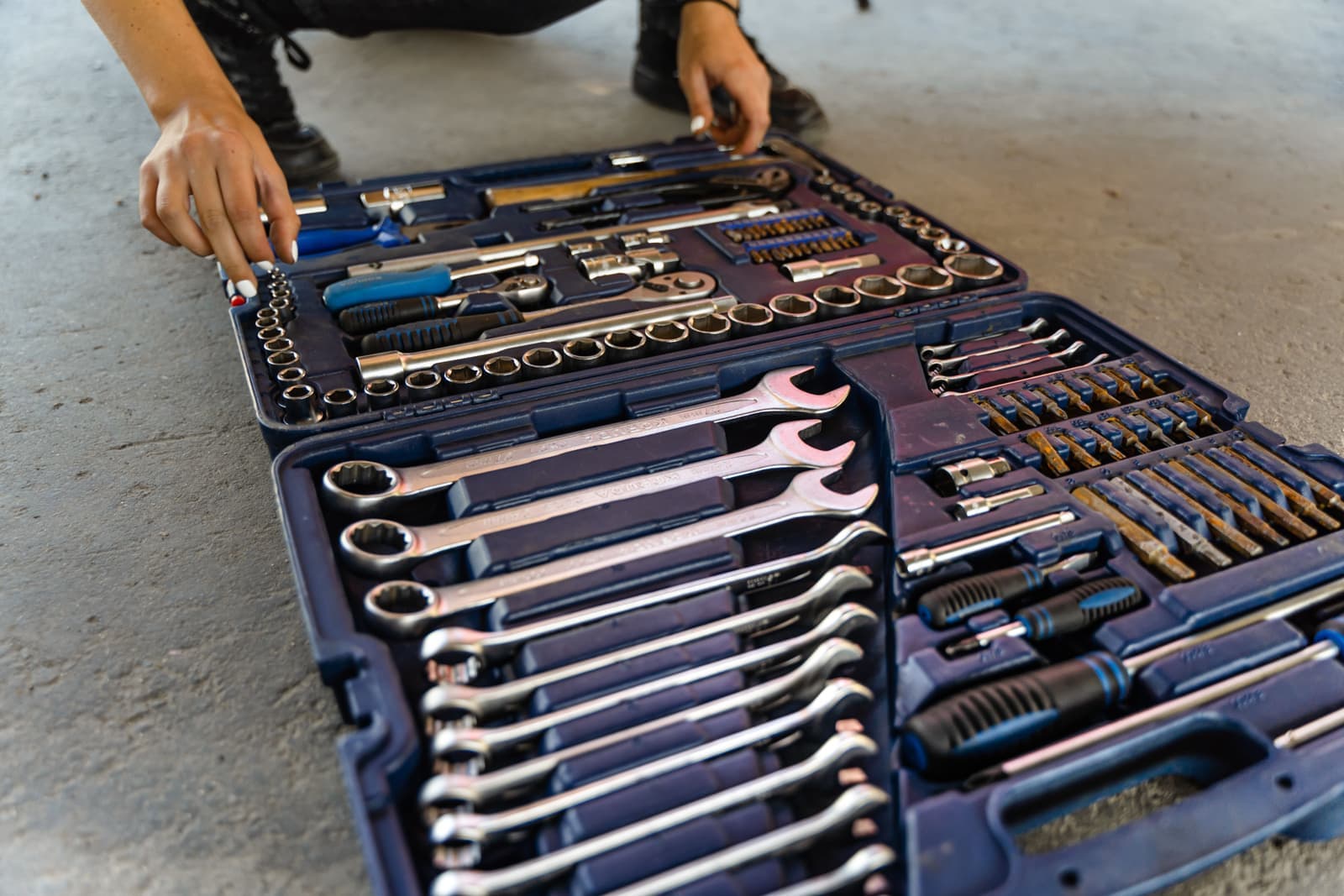
Sockets need to be upright, drive-separated and in size order, and any format that achieves all three works. Trays are the cheapest route and lift out to the work; foam is neater and costs drawer depth. Buy per drive size, not one universal tray.
Why sockets specifically
Every other tool in a drawer has a flat side and lies where you put it. Sockets have neither property. They roll on any surface, they nest inside each other so a 19 mm swallows a 13 mm and both disappear, and viewed from above they are a field of identical black circles with the size stamped on the side where you cannot see it.
That is three separate problems and they compound. A socket drawer without organization is not untidy, it is genuinely slower to use than a labeled coffee can - because at least a coffee can does not pretend to be organized.
Quick picks
Ranked on published specifications, not on hype. The key number is the figure that decides each pick, quoted from the maker. Tap a row for the full write-up, or go straight to the listing.
| # | Product | Best for | Key number | Price |
|---|---|---|---|---|
| 1 | 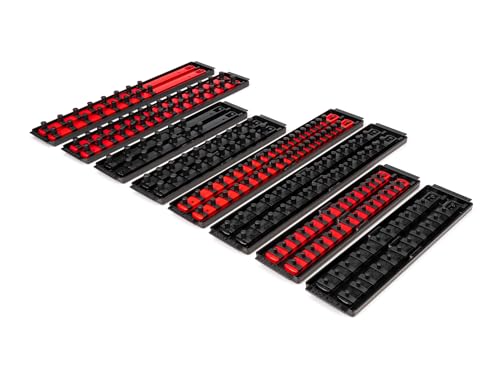 TEKTON socket rail and tray setSockets are the single worst-behaved item in a tool drawer: they roll, they nest, and they all look alike. Rails and trays fix all three, and covering all three drive sizes in one set is what stops the odd drive ending up loose. | Sockets, which are the worst thing in any drawer | 3 drives1/4, 3/8, 1/2 in | $140.00 · Check on Amazon |
| 2 |  5S shadow foam 18 x 36Two-layer shadow foam is the cheapest thing on this site that changes how a box works day to day: tools stop migrating, and a missing tool becomes visible instead of theoretical. An 18 x 36 in sheet covers one large drawer or two small ones. | Stopping tools sliding when the drawer opens | 2 layerscut-to-fit foam | $43.95 · Check on Amazon |
Every key number is a figure the manufacturer publishes. Where a maker publishes none, the row says so rather than substituting an estimate of ours.
Top pick · Sockets, which are the worst thing in any drawer
TEKTON 1/4, 3/8, 1/2 in. Drive Socket Rail and Tray Set (OST97902)
Sockets are the single worst-behaved item in a tool drawer: they roll, they nest, and they all look alike. Rails and trays fix all three, and covering all three drive sizes in one set is what stops the odd drive ending up loose.
- Body steel
- Not published
- Per drawer
- Not published
- Storage
- Not published
- Empty weight
- Not published
What works
- Sockets stop rolling, which is most of the noise a tool box makes
- Size order means you stop grabbing the wrong one twice
- Covers all three drive sizes, so no drive is left loose in the drawer
- Lift a rail out and take it to the work
What does not
- Trays waste drawer height compared with foam pockets
- Deep sockets often do not fit a tray sized for shallow ones
- Metric and imperial in one drawer still needs labels
- A branded set costs several times what an unbranded rail set does
| Published specification | |
|---|---|
| Type | Socket rail and tray set |
| Drives | 1/4, 3/8 and 1/2 in |
| Use | Sits in the drawer; sockets stand in size order |
| Where it is sold | Amazon, plus other retailers |
Who it is for
Anyone with more than one socket set in one drawer.
What it is not for
A drawer where every millimeter of depth is spoken for.
Sources for this entry
2 · Stopping tools sliding when the drawer opens
5S Two-Color Shadow Foam Tool Box Organizer, 18 x 36 in.
Two-layer shadow foam is the cheapest thing on this site that changes how a box works day to day: tools stop migrating, and a missing tool becomes visible instead of theoretical. An 18 x 36 in sheet covers one large drawer or two small ones.
- Body steel
- Not published
- Per drawer
- Not published
- Storage
- Not published
- Empty weight
- Not published
What works
- A missing tool is instantly visible, which is the actual point
- Tools stop sliding on a full-extension slide, which stops chipping
- Cheap enough to do one drawer and see if you like it
- The size is published, so you can work out sheet count before ordering
What does not
- Cutting it well takes time and a sharp blade
- Foam eats drawer depth, so a shallow drawer loses real capacity
- Once cut for a set, it is committed to that set
- The listing does not publish a thickness, which decides how deep a pocket you can cut
| Published specification | |
|---|---|
| Type | Two-layer (two-color) cut-to-fit shadow foam |
| Sheet size | 18 in x 36 in |
| Use | Cut a pocket per tool; the contrasting base layer shows a gap |
| Fits | Trim to any drawer |
| Thickness | Not published on the listing |
| Where it is sold | Amazon, plus other retailers |
Who it is for
The drawer you open most, first. Then the rest, slowly.
What it is not for
A drawer full of loose fasteners, where a divider tray is the better answer.
Sources for this entry
How we picked
- Does it hold sockets upright? Standing sockets show their size stamp; lying sockets do not.
- Is it drive-specific? 1/4, 3/8 and 1/2 in sockets are different sizes and a one-size tray fits none of them well.
- Does it lift out? A tray you can carry to the work is worth considerably more than one you cannot.
- Deep sockets or shallow? Most trays are sized for shallow, and deep sockets simply will not sit in them.
What we did not do
Everyone in this category says they spent seventy-five hours testing tool chests. We have not opened any of these boxes, and we say so. What we do instead: compile the published specs, convert the steel gauges, multiply out the slide ratings, cite the maker’s own listing, and show the arithmetic so you can check it. The full method, including how to challenge a figure.
What we would skip
A list with no losers is a list nobody edited. These are the choices we would actively steer you away from, and why.
One universal tray for every drive size
1/4, 3/8 and 1/2 inch sockets have very different diameters. A tray that accepts all three holds none of them snugly, and a socket that wobbles falls over, which is the problem you were solving.
Magnetic socket holders in a drawer
They are excellent on a toolbox lid or a magnetic tray at the work. In a drawer they add height, they pick up every bit of swarf in the box, and the sockets still come off when the drawer slams.
Rails, if your sockets do not stay on them
Clip rails are neat and they are also the thing most likely to launch a socket across the garage when a drawer closes hard. If you use rails, check the clip tension on the actual sockets you own.
The formats, honestly compared
| Format | What it does well | Where it falls down |
|---|---|---|
| Molded trays | Cheapest, sockets upright and in order, lifts out to the work | Costs drawer height; deep sockets often will not fit a shallow tray |
| Clip rails | Compact, takes up almost no drawer height, portable | Clip tension varies; a hard drawer close can pop sockets off |
| Cut foam | Neatest, shows a missing socket instantly, silent | An afternoon of cutting, and committed to that exact set |
| Magnetic holders | Excellent on a lid or at the work | In a drawer they collect swarf and add height |
The honest summary: trays for most people, foam if you want the missing-socket signal, rails if drawer height is your binding constraint.
Deep sockets are a separate problem
Most trays are molded for shallow sockets, and a deep socket in a shallow tray stands proud, wobbles, and prevents the drawer above closing. If you own deep sockets - and if you work on cars you do - buy trays sized for them or give them their own drawer.
This is also the case where a deep drawer earns its keep. Deep sockets standing upright in a six-inch drawer are perfectly happy; the same drawer with an inch and a half of foam in it is not. Foam the shallow drawers, tray the deep ones.
Metric and imperial, in the same box
If you own both, separate them physically rather than by memory. Different drawers if you have the drawers, different trays in the same drawer if you do not, and label the trays. The failure mode is not confusion - it is reaching for a 1/2 inch socket, finding a 13 mm, and rounding a fastener.
Colored trays are worth the small premium here. Color is a faster signal than a label and it works from across the garage. For the tools that live outside the drawer entirely, magnetic tool holders covers bars, rails and the pull ratings that disagree.
Common questions
What is the best way to organize sockets in a tool box?
Upright, separated by drive size, and in size order. Trays are the cheapest way to get all three and they lift out to the work. Cut foam is neater and also shows a missing socket, at the cost of drawer depth and an afternoon.
Are socket rails or trays better?
Trays for most people: they hold sockets more securely and lift out. Rails take almost no drawer height, which matters if that is your constraint, but clip tension varies and a hard drawer close can pop sockets off.
How do I stop sockets nesting inside each other?
Stand them upright in something. Nesting only happens when sockets lie loose on their sides - a tray, rail or foam pocket that keeps them vertical eliminates it entirely, and also means the size stamp is readable.
Sources
Read next
Tool box drawer dividers, and what they give up to cut foam
Drawer dividers and expandable trays compared against cut foam - ten minutes and reversible, against the missing-tool signal only foam gives you.
The best magnetic tool holders, and why the pull ratings disagree
Magnetic bars, toothed rails and slotted holders compared - plus the published pull rating that two sources quote twenty-four times apart.
How to organize a tool chest, in the order that works
Frequency decides the height, weight decides the depth, and the buying order that puts foam last for a reason.
Drawer foam, and the one thing it does that liner cannot
What foam does that liner cannot, what it costs in drawer depth, and which drawers are actually worth the afternoon.
Drawer liner: ten minutes, the whole box, do it on day one
The cheapest and first upgrade for any new chest: what sliding actually costs, and how to line a whole box in ten minutes.
What your drawer actually weighs, and what the box weighs full
The calculator for your own heaviest drawer, published tool weights, and the loaded-box figure no manufacturer prints.
The best tool chests, ranked on what the maker actually publishes
The flagship roundup: chests and cabinets ranked on published gauge, slide ratings and volume, with three things we would actively skip.