Head to head
Tool chest vs PACKOUT: two answers to two different questions
One stores several times as much for the money. The other goes in a truck and survives the rain. The right answer is entirely determined by whether your tools leave the garage.
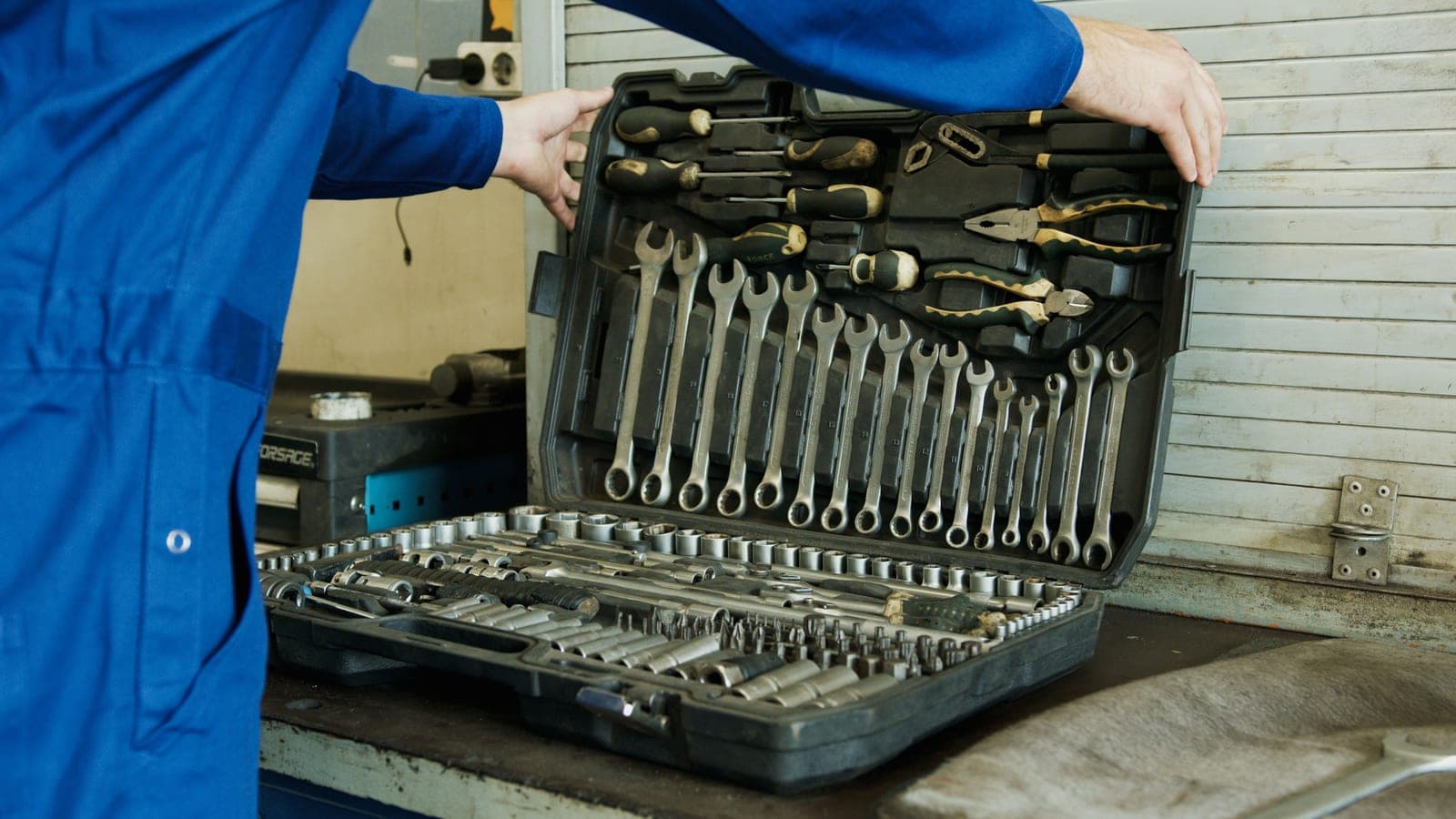
If the tools stay in the garage, buy the cabinet. A published 56-inch set carries 42,876 cubic inches with drawers rated at 120 lb per pair, eighteen times over; a PACKOUT rolling base publishes 250 lb dynamic for the whole stack. If the tools travel, buy the modular system - nothing about a 604 lb cabinet is portable.
Where you can actually buy each one
| Brand | Where it is sold | Do we earn anything? |
|---|---|---|
| Steel rolling cabinets | Amazon, Home Depot, Lowe's, Harbor Freight - brand dependent | Yes, on the Amazon listings only |
| Milwaukee PACKOUT | Home Depot, Amazon and tool dealers | Yes, on the Amazon listings |
We say this on every comparison because it changes what our recommendation is worth to you. Where we earn nothing, there is no commercial reason for us to steer you anywhere.
The numbers are not close
| 56 in. steel combo set | Modular rolling stack | |
|---|---|---|
| Published storage volume | 42,876 cu in (24.8 cu ft) | Not published in comparable terms; far less |
| Load capacity | 3,000 lb total; 120 lb per drawer pair across 18 drawers | 250 lb dynamic for the entire stack |
| Weather rating | None - it is an indoor object | IP65 dust and water |
| Empty weight | 604 lb | Light enough to lift a module by hand |
| Portability | Rolls across a flat garage floor | Goes in a truck, over gravel, up a curb |
| Security | Barrel or tubular locks on chest and cabinet | Padlockable, but plastic |
| Storage per dollar | Far higher | Far lower |
This is not a fair fight on either axis, which is the point: they are answers to different questions and the comparison only becomes useful once you know which question you have.
The one question that decides it
Do the tools leave the property? Not occasionally, not in theory - regularly enough that carrying them is part of the work. If yes, modular is the right answer and the storage-per-dollar gap is simply the price of portability. If no, the cabinet wins on every measure that matters and it is not close.
The failure mode is buying modular for a garage because it looks like the modern answer. A stack of modular boxes against a wall is an expensive, low-capacity cabinet with no drawers, and the IP65 rating protects tools from weather they are never going to see.
Quick picks
Ranked on published specifications, not on hype. The key number is the figure that decides each pick, quoted from the maker. Tap a row for the full write-up, or go straight to the listing.
| # | Product | Best for | Key number | Price |
|---|---|---|---|---|
| 1 | HuskyNo photo Husky 56 in. 18-drawer comboStill the most completely documented 56-inch combo in the category - 19-gauge body, 120 lb soft-close drawers, 3,000 lb rated, 604 lb empty on six 5 x 2 in casters, all published in one place. The catch as of September 2026 is the route: the Amazon listings have lapsed and it is a Home Depot purchase. | The one-and-done garage upgrade, if you can get to a Home Depot | 19 gabody steel | Check price on Amazon |
| 2 | 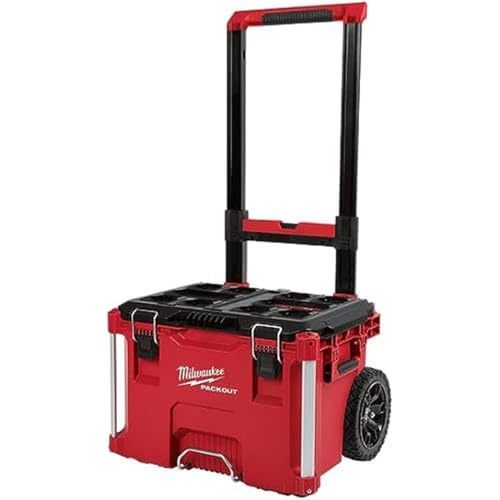 PACKOUT rolling tool boxMilwaukee publishes two capacities and both are worth knowing: 250 lb while you are rolling it, 1,000 lb standing still. Every other PACKOUT component clips to it, which is the actual product being sold. | The base of the largest modular ecosystem | 250 lbdynamic capacity | $189.00 · Check on Amazon |
Every key number is a figure the manufacturer publishes. Where a maker publishes none, the row says so rather than substituting an estimate of ours.
Top pick · The one-and-done garage upgrade, if you can get to a Home Depot
Husky 56 in. 18-Drawer Professional Tool Chest and Cabinet Set
Still the most completely documented 56-inch combo in the category - 19-gauge body, 120 lb soft-close drawers, 3,000 lb rated, 604 lb empty on six 5 x 2 in casters, all published in one place. The catch as of September 2026 is the route: the Amazon listings have lapsed and it is a Home Depot purchase.
- Body steel
- 19 ga0.0418 in (1.06 mm)
- Per drawer
- 120 lb96 lb working
- Storage
- 24.8 cu ft42,876 cu in
- Empty weight
- 604 lb101 lb per caster, empty
What works
- Publishes a real body gauge, which most listings in this category simply do not
- 120 lb per drawer is genuinely usable: a full 200-piece socket set is around 24 lb
- Six casters rather than four spreads a 600 lb empty weight over more contact points
- Barrel-key locks on both the chest and the cabinet
What does not
- No live Amazon listing right now, so this is a Home Depot trip rather than a delivery you can order from here
- 604 lb empty is a two-person, ramp-and-straps delivery problem
- Husky is a Home Depot house brand, so availability has always come and gone
- 56 in wide plus caster overhang needs about 5 ft of clear wall
| Published specification | |
|---|---|
| Body steel | 19 gauge |
| Drawers | 18 (6-drawer top chest over a 12-drawer cabinet) |
| Per-drawer rating | 120 lb soft-close; deep bottom drawers run dual glides |
| Total capacity | 3,000 lb |
| Empty weight | 604 lb |
| Storage volume | 42,876 cu in |
| Casters | Six, 5 in x 2 in |
| Power | Two power centers, 6 outlets and 2 USB |
| Where to buy | The Home Depot. No live Amazon listing as of September 2026. |
| Where it is sold | The Home Depot |
Who it is for
Someone buying the last box they intend to buy for a decade, with a garage bay to put it in and a Home Depot they can reach.
What it is not for
Anyone who needs it delivered from an online listing today, or who has less than five feet of wall.
No buy button, on purpose
This is sold through The Home Depot rather than Amazon. There is no affiliate link we can build for it, so there is no button here — and no commercial reason for us to push you toward or away from it. How this site is funded.
Sources for this entry
2 · The base of the largest modular ecosystem
Milwaukee PACKOUT Rolling Tool Box (48-22-8426)
Milwaukee publishes two capacities and both are worth knowing: 250 lb while you are rolling it, 1,000 lb standing still. Every other PACKOUT component clips to it, which is the actual product being sold.
- Body steel
- Not published
- Per drawer
- Not published
- Storage
- Not published
- Empty weight
- Not published
What works
- Publishes a dynamic AND a static capacity, which almost nobody in modular storage does
- 9 in wheels handle a gravel driveway and a curb, not just a shop floor
- The largest component range of any modular system, so the base has somewhere to grow
- IP65 means rain on a truck bed is not a problem
What does not
- 250 lb dynamic is the real ceiling and a loaded stack passes it easily
- You are buying into an ecosystem: leaving it later means replacing the whole stack
- Sold through many channels, so the Amazon listing is not always the best price
| Published specification | |
|---|---|
| Dynamic capacity | 250 lb (in motion) |
| Static capacity | 1,000 lb (stationary) |
| Wheels | 9 in all-terrain |
| Handle | 19.75 in fully collapsible |
| Weather | IP65-rated seal |
| Connection | Integrated locking cleats, compatible with all PACKOUT components |
| Where it is sold | Amazon, plus other retailers |
Who it is for
Anyone whose tools travel - job site, driveway, or a second garage.
What it is not for
A fixed garage bay, where a steel cabinet gives far more storage per dollar.
Sources for this entry
And if the portable half of that arrangement might be soft-sided rather than a hard box, tool box vs tool bag is the comparison one level down.
The case for both, which is common
Plenty of people end up with a cabinet in the garage and a modular box that travels, and that is a sensible arrangement rather than a failure to decide. The cabinet is the library; the modular box is what you check out of it for a specific job.
If you do that, buy the cabinet first. It is the storage, and the modular box's job is to hold a subset of it. Buying the portable half first tends to produce a collection organized around what fits in the box rather than around what you own.
What the cabinet cannot do
- Leave the garage. 604 lb empty is a delivery event, not a load.
- Survive weather. A steel cabinet in a damp unheated space has a rust problem, and one outdoors has a serious one.
- Go up steps. Casters do stairs badly and loaded casters do stairs not at all.
- Be reconfigured. The drawer layout is the drawer layout for the life of the box.
What the modular system cannot do
- Hold real weight. 250 lb for the whole rolling stack, against 120 lb per drawer pair on a cabinet.
- Store a full tool collection. Not at any sane number of modules.
- Give you a work surface. A cabinet top is a bench at roughly the right height. A stack of boxes is not.
- Show you everything at once. Even a drawer-based modular system holds a fraction of what an open cabinet drawer shows you.
The rule, stated once
Buy storage for where the tools live, and portability for where they go. Most home garages need one cabinet and possibly one carrying box. Most trades need the reverse. Buying the wrong one is not a disaster - it is just paying a large premium for a property you are never going to use.
Common questions
Is PACKOUT better than a tool chest?
For carrying tools, yes. For storing them, no, and not by a small margin: a published 56 in combo set holds 42,876 cu in with drawers rated at 120 lb per pair across 18 drawers, against 250 lb dynamic for an entire PACKOUT rolling stack.
Should I buy a modular system for my home garage?
Only if the tools regularly leave it. Against a wall, a modular stack is an expensive low-capacity cabinet with an IP65 rating protecting tools from weather they will never see. Buy the cabinet, and add one carrying box if you need one.
Can you have both a tool chest and a modular system?
Yes, and it is a common and sensible arrangement - the cabinet is the library, the modular box is what you check out for a job. Buy the cabinet first, so the collection is organized around what you own rather than around what fits in a box.
Sources
Read next
Milwaukee PACKOUT rolling tool box: the published numbers, examined
A specification-led review of Milwaukee's PACKOUT rolling base: two capacity figures, a tested IP65 rating, 9 in wheels, and who should not buy it.
Is PACKOUT worth it? Three questions that answer it for you
The PACKOUT premium buys cleats, a weather seal and an impact shell - and all three only pay back in transit. Three questions that settle it.
PACKOUT vs ToughSystem 2.0: identical headline specs, one real difference
Identical headline specs, one real difference: backward compatibility against range size, and the dynamic-versus-static trap in between.
How to pick a stacking system you will not regret
Three questions in order, the weight table that decides which systems are even eligible, and the switching cost nobody puts in a comparison.
The best tool chests, ranked on what the maker actually publishes
The flagship roundup: chests and cabinets ranked on published gauge, slide ratings and volume, with three things we would actively skip.
Milwaukee PACKOUT, explained by its own specification sheet
How PACKOUT works, what its two published capacities mean, what IP65 covers, and which piece to buy first.
Tool chest vs tool cabinet, and which half to buy first
The terminology settled once, and the reason the cabinet is almost always the half to buy first.