Calculator
Workbench height, worked out from your own body
The category answers this with one number. The published guidance is a rule relative to your elbow, which is why it produces a range rather than an answer.
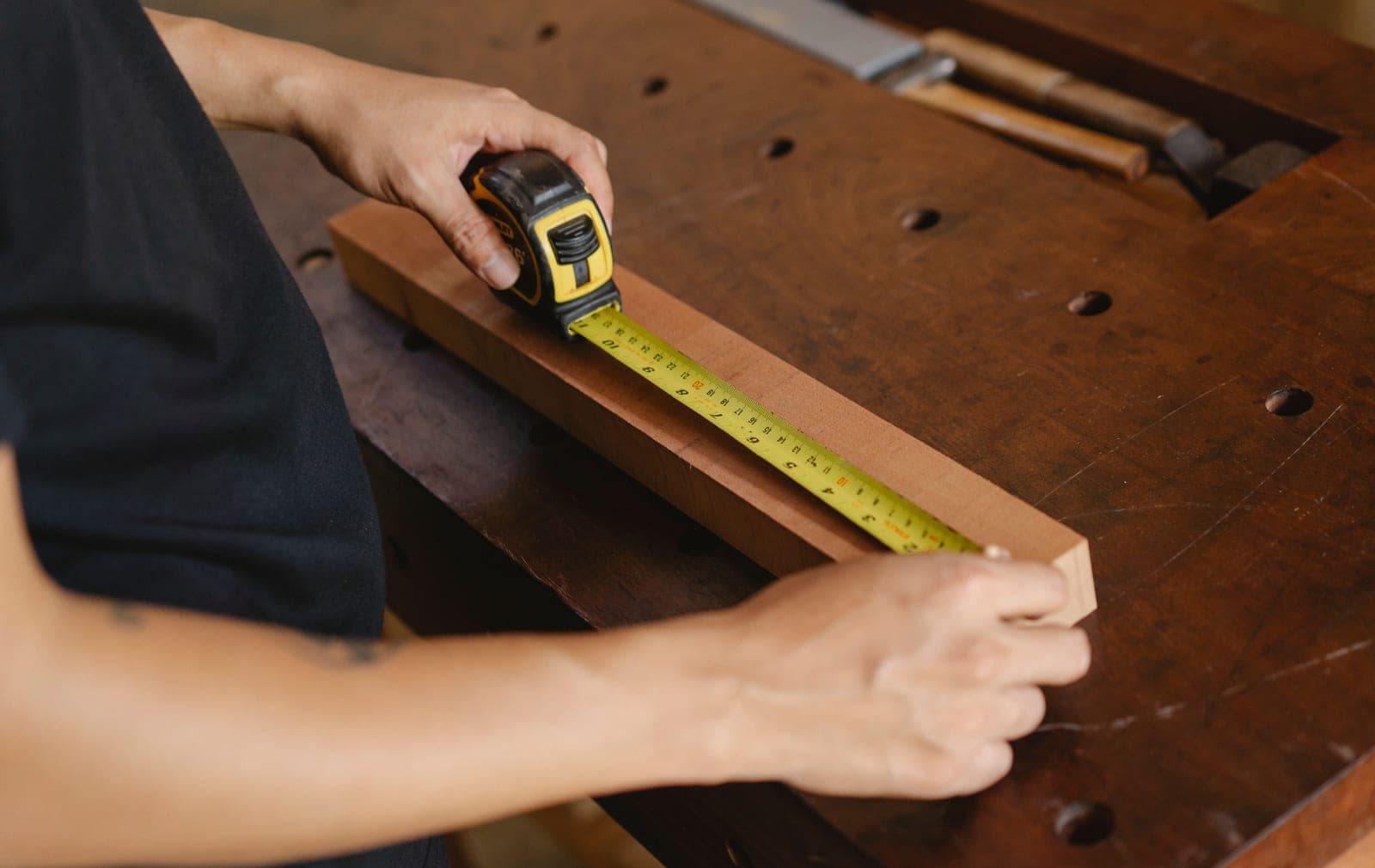
Published guidance sets bench height relative to elbow height: about elbow height for general work, 2 to 4 inches above for precision assembly, and well below for heavy work where you want body weight over the tool. That produces the familiar 34 to 38 inch range for general bench work - a range because people are different sizes.
Work out your own bench
How tall are you?
47 in
Precision and assembly
43 in
General bench work
37 in
Heavy work, planing, hammering
Why one number cannot be right
Elbow height is roughly 62.5 percent of standing height. For someone 5 ft 4 in that is about 40 inches; for someone 6 ft 2 in it is about 46. Six inches apart, from the same rule. A single catalog height of 34 inches is below elbow height for both of them - which is right for heavy work and wrong for almost everything else.
That coefficient is the one estimate on this site, and it is labeled as an estimate wherever it appears. It is an average across adults; your own arm is the better input. If you can, stand straight, bend your arm to 90 degrees, and measure floor to elbow. Then apply the same offsets.
| Your height | Elbow height | Precision and assembly | General bench work | Heavy work, planing, hammering |
|---|---|---|---|---|
| 5 ft 4 in | 40 in | 43 in | 39 in | 33 in |
| 5 ft 6 in | 41.3 in | 44 in | 40 in | 34 in |
| 5 ft 8 in | 42.5 in | 46 in | 42 in | 36 in |
| 5 ft 10 in | 43.8 in | 47 in | 43 in | 37 in |
| 6 ft 0 in | 45 in | 48 in | 44 in | 38 in |
| 6 ft 2 in | 46.3 in | 49 in | 45 in | 39 in |
| 6 ft 4 in | 47.5 in | 51 in | 47 in | 41 in |
Elbow height is estimated at 62.5 percent of standing height. That coefficient is the one estimate on this page and it is an average, not your body — measure your own elbow if you can, and use the row as a starting point if you cannot.
The three task heights, and why they differ
| Task | Relative to elbow | Why |
|---|---|---|
| Precision and assembly | 2 to 4 in above | You are looking at small things closely. A higher surface brings the work to your eyes instead of your back |
| General bench work | At about elbow height | Arms at roughly 90 degrees, shoulders relaxed. The default if you only build one bench |
| Heavy work: planing, hammering, chiselling | Well below | You need your body weight over the tool, and you cannot get it there if the work is at chest height |
Published guidance also gives 28-30 in as a range for heavy woodworking, which is dramatically lower than a general bench and feels wrong until you plane something on it.
The things that silently change the number
- Casters add two to three inches. A 34 in bench on 3 in casters is a 37 in bench. Check whether the published height includes them. Rolling benches.
- A thick top adds its own thickness if the published height is measured to the frame rather than the surface. Read which one the listing means.
- A mat on the floor raises you, not the bench - which lowers the effective bench height by the mat thickness. Anti-fatigue mats are commonly half an inch to three-quarters.
- Boots. Not a joke: an inch and a half of work boot sole is an inch and a half of bench height, and you almost never work at the bench barefoot.
If you can only have one bench
Build to general height - at about elbow - and solve the other two cases with accessories rather than with a second bench. A bench hook or a low platform raises the work for detail jobs; a sturdy low table or a vise mounted lower handles the heavy work.
Or buy adjustable legs, which is the reason an adjustable bench earns more credit on this site than its other specs alone would justify. Being able to change the height by a few inches converts one bench into all three cases, and it is the fix for the category's fundamental design flaw. The bench roundup.
How to check a bench you already own
- Stand at it in your work boots, arms relaxed at your sides.
- Bend your forearms to horizontal. Your palms should be roughly level with the bench top for general work.
- If your shoulders lift to get your hands onto the work, the bench is too high.
- If you are stooping, it is too low - and this is the more common failure, because catalog heights cluster below most adults' elbows.
- Fix it cheaply: blocks under the legs raise a bench for a few dollars, and an anti-fatigue mat effectively lowers one.
Common questions
What is the correct workbench height?
About elbow height for general work, 2 to 4 inches above it for precision assembly, and well below for heavy work. Elbow height is roughly 62.5 percent of standing height, which is why published guidance gives a 34 to 38 inch range rather than one number.
How do I calculate my workbench height?
Measure floor to elbow with your arm bent to 90 degrees, in the boots you actually wear. Then add 2 to 4 inches for precision work, use it as-is for general work, or subtract several inches for heavy work. The calculator on this page does it from your standing height if you cannot measure.
Is 36 inches a good workbench height?
It is good for someone whose elbow sits near 36 inches, which is a person around 4 ft 10 in. For most adults 36 inches is below elbow height, which makes it right for heavy work and low for general bench work. Measure rather than assume.
Do casters change the workbench height I should buy?
Yes - casters add their own height, typically two to three inches. A bench published at 34 in on 3 in casters works out at 37 in. Check whether the published figure includes the wheels before comparing it to your number.
Sources
Read next
Best workbenches under $300, and the one number the price cuts first
Four benches under $300 compared on published thickness, height and capacity - and why the capacity claims are the least useful number on the page.
How to choose a workbench, in the order that matters
Height first because it is the only spec about you, then top thickness, depth, and whether drawers belong in the same purchase.
The best garage workbenches, judged on the top and the height
Benches ranked on published top thickness and rated load, with the height calculation that decides whether any of them suits your body.
Workbench tops: thickness first, then material
Why thickness beats material, the five surfaces compared, and the vise-mounting check that is not retrofittable.
Rolling workbenches, and the two things wheels cost you
When wheels are worth it, the height they silently add, and the difference between a wheel lock and a total lock.
Fitting a real workbench into a garage with a car in it
Door swing and walkway are the real constraints. Go long and shallow, and here is what to give up and what not to.