Maintenance
Why tools rust in a closed box, and what actually stops it
A sealed steel box in an unheated garage is close to ideal conditions for surface rust. The mechanism is condensation, and once you know that the fixes are obvious and cheap.
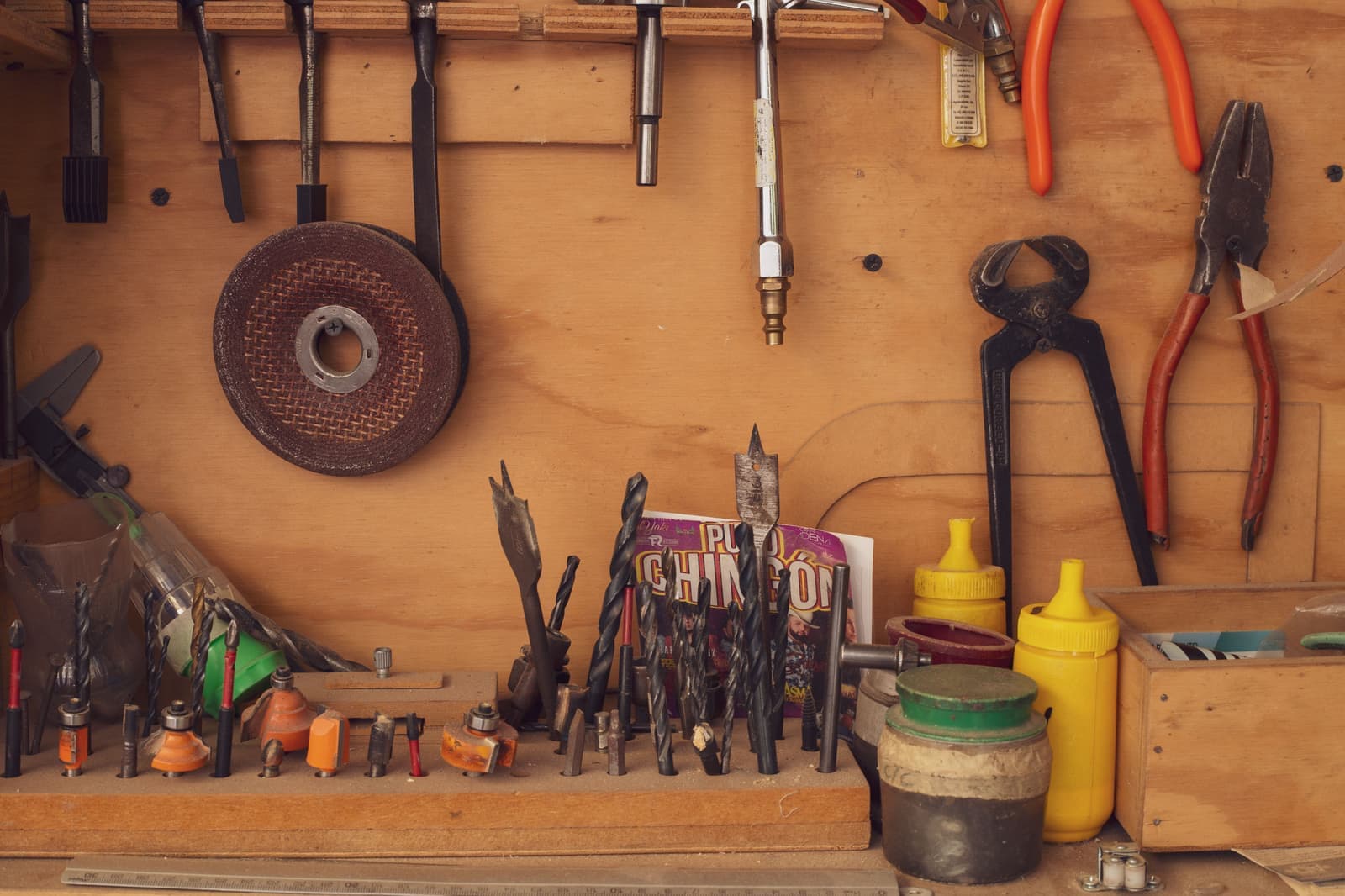
Tools rust in a closed box because of condensation, not damp air. Warm humid air gets in during the day, the garage cools overnight, and moisture condenses on the coldest metal in the box - your tools. The fixes are: do not put tools away wet, keep a light oil film on bare steel, and put a vapor-corrosion inhibitor in each drawer.
The mechanism, because it explains every fix
Air holds more water when it is warm. A garage in summer or in a mild autumn afternoon is warm and its air holds a lot of moisture, and that air is inside your tool box because a tool box is not airtight - it opens, it breathes past its drawer gaps, and it equalizes with the room.
Overnight the garage cools. The air inside the box cools with it, and cool air holds less water, so the excess condenses onto whatever is coldest. Dense steel loses heat slower and stays cooler than the air around it, which means your tools are the condensation surface. Do that for a hundred nights and bare steel gets a haze of surface rust.
This is why a box in a heated shop rarely has the problem and a box in an unheated garage frequently does. It is not that the garage is damp. It is that the garage swings in temperature.
What actually works
- Never put a tool away wet. This includes wet with brake cleaner, which flashes off and takes heat with it, and wet with your own hands after a hot job. Wipe, then put away. It is the single highest-value habit here.
- Keep a light oil film on bare steel. A wiped-on film of light machine oil is a physical barrier between the steel and the water. It does not need to be thick and it does not need to be expensive.
- Put a vapor-corrosion inhibitor in every drawer. VCI emitters release a vapor that deposits a molecular protective layer on exposed metal in an enclosed space. They are cheap, they last months, and a drawer is exactly the enclosed space they are designed for.
- Reduce the temperature swing if you can. Insulating a garage door does more for tool rust than anything you put in a drawer, because it attacks the cause rather than the effect.
- Use liner, and change it when it gets grubby. Liner holds tools off bare drawer steel, which stops the two-metals-touching corrosion that starts at contact points.
What does not work, or barely
| The thing | What it actually does | Verdict |
|---|---|---|
| Silica gel packets | Absorbs a small, fixed amount of moisture then stops | Fine in a sealed case with a small volume. In a breathing tool box they saturate quickly |
| A light bulb in the cabinet | Raises the internal temperature slightly, which does genuinely reduce condensation | Works, but it is a permanent load and a heat source in a box full of solvent-soaked rags |
| Chalk in the drawer | Absorbs a trivial amount of moisture | Folk remedy. Harmless, and not a solution |
| Heavy grease on tools | Genuinely excludes water | Works and is horrible to use. Reserve it for long-term storage, not daily tools |
The pattern: things that reduce the temperature swing or coat the metal work. Things that try to absorb moisture out of a box that keeps breathing in more do not.
If rust has already started
Surface haze comes off with fine abrasive and oil - a gray scouring pad and light oil, working with the grain of the finish, then wiped dry and re-oiled. Do not use a wire wheel on a finished tool unless you have decided you no longer care about the finish.
Pitting is different: the steel is gone and cleaning it up only removes the oxide. Clean it, oil it, and accept it. On a working tool a pit is cosmetic; on a precision surface - a machinist square, a micrometer anvil - it is not, and those are exactly the tools worth keeping in a case with real desiccant rather than loose in a drawer.
The chrome question
Chrome-plated sockets and wrenches are not immune. Chrome plating is porous at a microscopic level, and rust starts underneath it at any chip or wear point and then lifts the plating. That is why a socket set that looks perfect can suddenly show rust spots along a wear edge.
Same treatment: dry them, film them, and give the drawer a VCI emitter. The plating is not doing the job you assumed it was.
Common questions
Why are my tools rusting inside my tool box?
Condensation, not damp. Warm humid air enters the box during the day, the garage cools overnight, and moisture condenses on the coldest metal inside - your tools. It is caused by temperature swing, which is why an unheated garage is much worse than a heated shop.
What can I put in my tool box to prevent rust?
A vapor-corrosion inhibitor emitter in each drawer is the most effective per dollar. Add a light oil film on bare steel and a drawer liner so tools are not resting on bare drawer metal. Silica gel saturates quickly in a box that keeps breathing.
Does chrome plating stop tools rusting?
Not reliably. Chrome plating is microscopically porous, and rust starts underneath it at chips and wear points, then lifts the plating. Chrome-plated sockets need the same drying and oiling as bare steel.
Sources
Read next
Drawer liner: ten minutes, the whole box, do it on day one
The cheapest and first upgrade for any new chest: what sliding actually costs, and how to line a whole box in ten minutes.
How to organize a tool chest, in the order that works
Frequency decides the height, weight decides the depth, and the buying order that puts foam last for a reason.
Tool box locks: what they are for, and what to do when one fails
What a chest lock is actually for, how to get a replacement key from the cylinder code, and the failure that is not the lock at all.
Stainless steel tool chests, and what the word is actually attached to
On a stainless steel tool chest the stainless is usually just the countertop - and not one of them publishes a steel gauge.
Workbench tops: thickness first, then material
Why thickness beats material, the five surfaces compared, and the vise-mounting check that is not retrofittable.
The best tool chests, ranked on what the maker actually publishes
The flagship roundup: chests and cabinets ranked on published gauge, slide ratings and volume, with three things we would actively skip.