The sweet spot
Best tool chests under $1,000, where the specs stop getting cut
This is the band where makers start publishing gauge, slide ratings and empty weight together - which is exactly what makes the boxes comparable, and exactly why it is the band worth buying in.
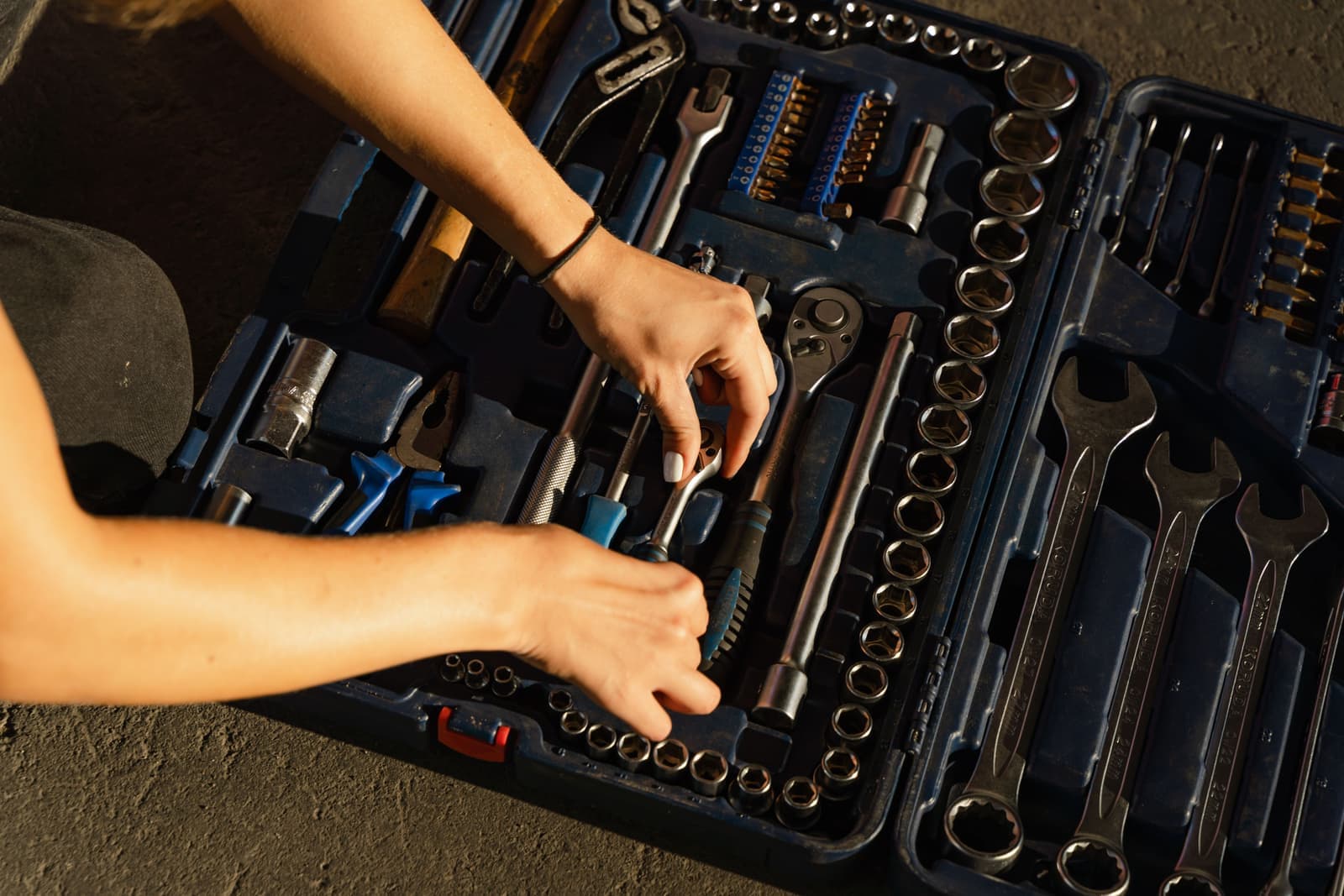
Under $1,000 the thing worth hunting is not a thick body - it is a maker willing to print a gauge at all. Expect 100 lb drawer slides and a body in the 20-21 gauge range; treat a published figure, even an unflattering one, as the signal. Anything that publishes neither a gauge nor a slide rating is asking mid-range money for engineering it will not describe.
Why this is the band most people should buy in
Below $500, something has been cut and you often cannot tell what. Above $1,500 you are buying finish, brand and warranty as much as steel. Between those, and especially under $1,000, is where the specification sheet gets interesting: gauges get published, slide ratings jump from 100 to 120 and 150 lb, casters get sized, and empty weights appear so you can actually do the loaded-weight arithmetic.
That is not a coincidence. Makers publish numbers when the numbers help them. A cabinet with 150 lb soft-close slides is going to say so, and a cabinet with 75 lb slides is going to say heavy duty instead. Reading the specification sheet for what it does not say is the single most useful habit in this category.
Quick picks
Ranked on published specifications, not on hype. The key number is the figure that decides each pick, quoted from the maker. Tap a row for the full write-up, or go straight to the listing.
| # | Product | Best for | Key number | Price |
|---|---|---|---|---|
| 1 |  WEN 52 in. 9-drawerWEN publishes a body gauge at a price where almost nobody does. Twenty-one gauge is thin - 0.0329 in, thinner than the 20-gauge budget default - and saying so out loud is worth more than the silence you get from most cabinets in this bracket. Nine soft-close drawers rated 100 lb, on 1,500 lb casters. | A published gauge inside the budget | 21 gabody steel | $657.66 · Check on Amazon |
| 2 | 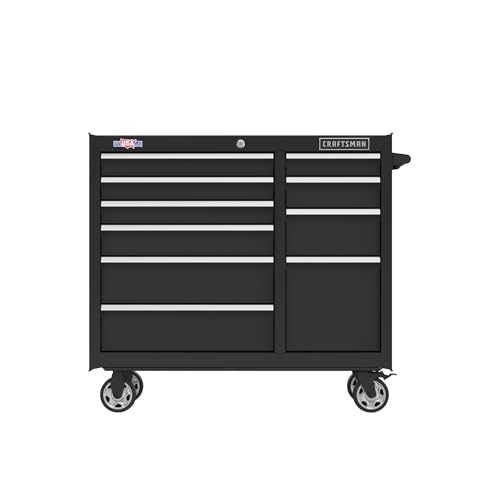 Craftsman S2000 41 in. cabinetThe direct answer to Kobalt's 41-inch cabinet, and the only one of the two that can be shipped to you. Craftsman publishes an 18-20 gauge I-frame where Kobalt publishes no gauge at all - but at 18 in deep against Kobalt's 24.5, it gives up about 3,000 cubic inches to do it. | The 41-inch cabinet you can actually have delivered | 18-20 gasteel I-frame | $968.45 · Check on Amazon |
| 3 |  56 in. 10-drawer cabinetPublishes 150 lb soft-close slides and a 3,000 lb-plus total across 23,583 cubic inches, but no body gauge - which is the single most useful number in the category and its absence is worth weighing. | Volume per dollar at 56 inches | 23,583 cu instorage volume | $2,200.00 · Check on Amazon |
Every key number is a figure the manufacturer publishes. Where a maker publishes none, the row says so rather than substituting an estimate of ours.
Top pick · A published gauge inside the budget
WEN 52 in. Premium Rolling Tool Cabinet (GG532B)
WEN publishes a body gauge at a price where almost nobody does. Twenty-one gauge is thin - 0.0329 in, thinner than the 20-gauge budget default - and saying so out loud is worth more than the silence you get from most cabinets in this bracket. Nine soft-close drawers rated 100 lb, on 1,500 lb casters.
- Body steel
- 21 ga0.0329 in (0.84 mm)
- Per drawer
- 100 lb80 lb working
- Storage
- Not published
- Empty weight
- Not published
What works
- Publishes a body gauge in a bracket where most listings publish none
- Publishes every individual drawer's internal dimensions, which almost nothing else does
- Soft-close ball-bearing slides at 100 lb, not friction glides
- Casters rated 1,500 lb, published separately from the cabinet
What does not
- 21 gauge is 0.0329 in - thinner than the 20-gauge budget default and well under the 18-19 gauge of the premium cabinets
- No published total capacity for the cabinet itself, only the caster rating
- 18 in deep will not take a long breaker bar lying flat
- A 47.5 in wide drawer at 3.5 in deep is a lot of unsupported span for heavy tools
| Published specification | |
|---|---|
| Body steel | 21 gauge, powder coated |
| Dimensions | 52 in W x 18 in D x 37 in H |
| Drawers | 9, lockable, with PVC liners |
| Per-drawer rating | 100 lb, soft-close ball bearing |
| Largest drawer | 47.5 in x 15.5 in x 3.5 in |
| Deep drawers | Two at 9.5 in internal height |
| Casters | 5 in x 2 in, rated 1,500 lb |
| Warranty | Two years |
| Total capacity | Not published |
| Where it is sold | Amazon, plus other retailers |
Who it is for
A budget where the alternative is a cabinet that tells you nothing about its steel.
What it is not for
Heavy loading. Twenty-one gauge is a real limit and the page says so.
2 · The 41-inch cabinet you can actually have delivered
Craftsman S2000 Series 41 in. 10-Drawer Rolling Tool Cabinet (CMST341102BK)
The direct answer to Kobalt's 41-inch cabinet, and the only one of the two that can be shipped to you. Craftsman publishes an 18-20 gauge I-frame where Kobalt publishes no gauge at all - but at 18 in deep against Kobalt's 24.5, it gives up about 3,000 cubic inches to do it.
- Body steel
- 18 ga0.0478 in (1.21 mm)
- Per drawer
- 100 lb80 lb working
- Storage
- 8.1 cu ft14,014 cu in
- Empty weight
- Not published
What works
- Publishes a gauge at all, which the Kobalt cabinet it competes with does not
- The I-frame range is more honest than a single figure - it says the frame is thicker than the panels
- 1,500 lb across 10 soft-close drawers rated 100 lb each, with the arithmetic adding up
- Genuinely buyable online, where the Lowe's house brands in this size class are not
What does not
- 18 in deep will not take a long breaker bar or a 24 in torque wrench lying flat
- About 3,000 cubic inches behind the same-width Kobalt, which is entirely the depth difference
- Craftsman publishes no empty weight and no dimensions on its own page
- Amazon stock on the 41-inch cabinets is thin and moves in and out
| Published specification | |
|---|---|
| Body steel | 18-20 gauge steel I-frame construction |
| Dimensions | 41 in W x 18 in D x 37-1/2 in H (retail listing; Craftsman publishes no dimensions) |
| Drawers | 10, soft-close |
| Per-drawer rating | 100 lb |
| Total load rating | 1,500 lb |
| Storage volume | 14,014 cu in |
| Casters | 5 in x 2 in, toe-locking brakes, reinforced mounting |
| Lock | Internal locking system with over-molded key |
| Included | Cabinet drawer trays and a magnetic paper towel holder |
| Empty weight | Not published |
| Where it is sold | Amazon, plus other retailers |
Who it is for
A narrow garage where 24 in of cabinet depth would stop the car door, and where delivery matters.
What it is not for
Long tools laid flat, or anyone who can get to a Lowe's and wants the deeper box.
3 · Volume per dollar at 56 inches
High-Capacity 56 in. 10-Drawer Rolling Tool Cabinet
Publishes 150 lb soft-close slides and a 3,000 lb-plus total across 23,583 cubic inches, but no body gauge - which is the single most useful number in the category and its absence is worth weighing.
- Body steel
- Not published
- Per drawer
- 150 lb120 lb working
- Storage
- 13.6 cu ft23,583 cu in
- Empty weight
- Not published
What works
- 150 lb slides match the best published figure among these cabinets
- 13.6 cubic feet is a lot of drawer for the footprint
- Soft close throughout rather than on selected drawers
What does not
- No published body gauge - you are trusting the drawer rating alone
- No published empty weight, so the loaded-caster check cannot be done
- Amazon-native brand with limited service history behind it
| Published specification | |
|---|---|
| Body steel | Not published |
| Width | 56 in |
| Drawers | 10 |
| Per-drawer rating | 150 lb soft-close ball bearing |
| Total capacity | 3,000 lb and up |
| Storage volume | 23,583 cu in (about 13.6 cu ft) |
| Where it is sold | Amazon, plus other retailers |
Who it is for
A buyer optimizing drawer volume per dollar who accepts an unpublished gauge.
What it is not for
Anyone who wants to check the steel before they buy.
Sources for this entry
How we picked
- All four numbers, or a very good reason. In this band there is no excuse for an unpublished gauge, and boxes that publish everything rank first.
- 120 lb per drawer as the floor. Below that you are paying mid-range money for entry-level slides.
- Casters sized and counted. Six casters or four, and what size - this is the band where it starts being printed.
- Volume converted, not counted. Cubic inches divided by 1,728, so the boxes are comparable regardless of drawer layout.
What we did not do
Everyone in this category says they spent seventy-five hours testing tool chests. We have not opened any of these boxes, and we say so. What we do instead: compile the published specs, convert the steel gauges, multiply out the slide ratings, cite the maker’s own listing, and show the arithmetic so you can check it. The full method, including how to challenge a figure.
What we would skip
A list with no losers is a list nobody edited. These are the choices we would actively steer you away from, and why.
Paying up purely for width
The jump from 46 to 56 inches is real money and it is only worth it if you have the wall and the tools. A 46 inch cabinet in 18 gauge with the money left over for a bench is a better garage than a 56 inch cabinet and no bench.
A mid-price box with 100 lb drawers and no published gauge
At this price the published-spec boxes exist and are competitive. Buying one that publishes less for the same money is paying for finish rather than for engineering, and finish is the thing you stop noticing after a week.
Depth is the underrated spec in this band
Most cabinets in this price range are 22 inches deep. A few are 24 or 25, and that difference decides whether a half-inch breaker bar or a long torque wrench lies flat in a drawer or sits diagonally taking up two tools' worth of space. If your tools are long, depth is worth more to you than another six inches of width.
The trade is floor space and reach: a 24-inch-deep cabinet takes more of the bay and puts the back of the drawer further from your hand. How boxes are measured covers what the published depth figure includes and what it leaves out.
Six casters or four
If the work is automotive specifically, this band is also where the drawer ratings start comfortably clearing what dense tools demand - mechanic's tool boxes works that through.
A 56-inch combo set can weigh 600 lb empty and considerably more loaded. Spread over four casters that is 150 lb a wheel before you put a single tool in; over six it is 100. More casters means lower load per wheel, less flex in the base rail, and a box that rolls rather than shudders.
Caster diameter matters too, and for a very specific reason: a 6-inch wheel crosses a garage expansion joint that stops a 5-inch wheel dead. If your garage floor has joints or a drain channel, that is not a detail. The casters page has the arithmetic and what the ratings actually cover.
Common questions
Is a $1,000 tool chest worth it over a $500 one?
Usually yes, and for a specific reason: it is the band where makers start publishing gauge, slide ratings, caster size and empty weight together. That makes the box checkable before you buy, which a cheaper box often is not.
What drawer rating should I expect under $1,000?
100 lb per pair is what this bracket actually offers today, and 120 to 150 lb appears once you go above it. Remember the published design guidance of 70-80 percent: a 100 lb pair is an 80 lb drawer in practice, and a 150 lb pair is a 120 lb drawer. The drawer arithmetic.
Should I buy a wider chest or a deeper one?
Deeper, if your tools are long. A 24 in deep cabinet lets a half-inch breaker bar lie flat where a 22 in one makes it sit diagonally. Width buys drawer count; depth buys usable drawers. How boxes are measured.
Sources
Read next
Best tool chests under $500, and what the price gets cut from
What a sub-$500 budget genuinely buys, which spec gets dropped first at this price, and how to tell before you order.
The best tool chests, ranked on what the maker actually publishes
The flagship roundup: chests and cabinets ranked on published gauge, slide ratings and volume, with three things we would actively skip.
56-inch tool chests, and the five feet of wall they really need
What a 56-inch cabinet really needs in floor space, what the width figure excludes, and the ones worth buying on published specs.
Casters: the component that decides whether the box moves
Load per caster worked out, why diameter is about obstacles rather than weight, and how to move several hundred pounds without tipping it.
How tool boxes are measured, and what the number leaves out
What the width figure includes and excludes, the cubic-inch conversion, and the measurements the listing will never give you.