Buy the top, build the base
The best workbench tops, and the slabs that will not tell you how thick they are
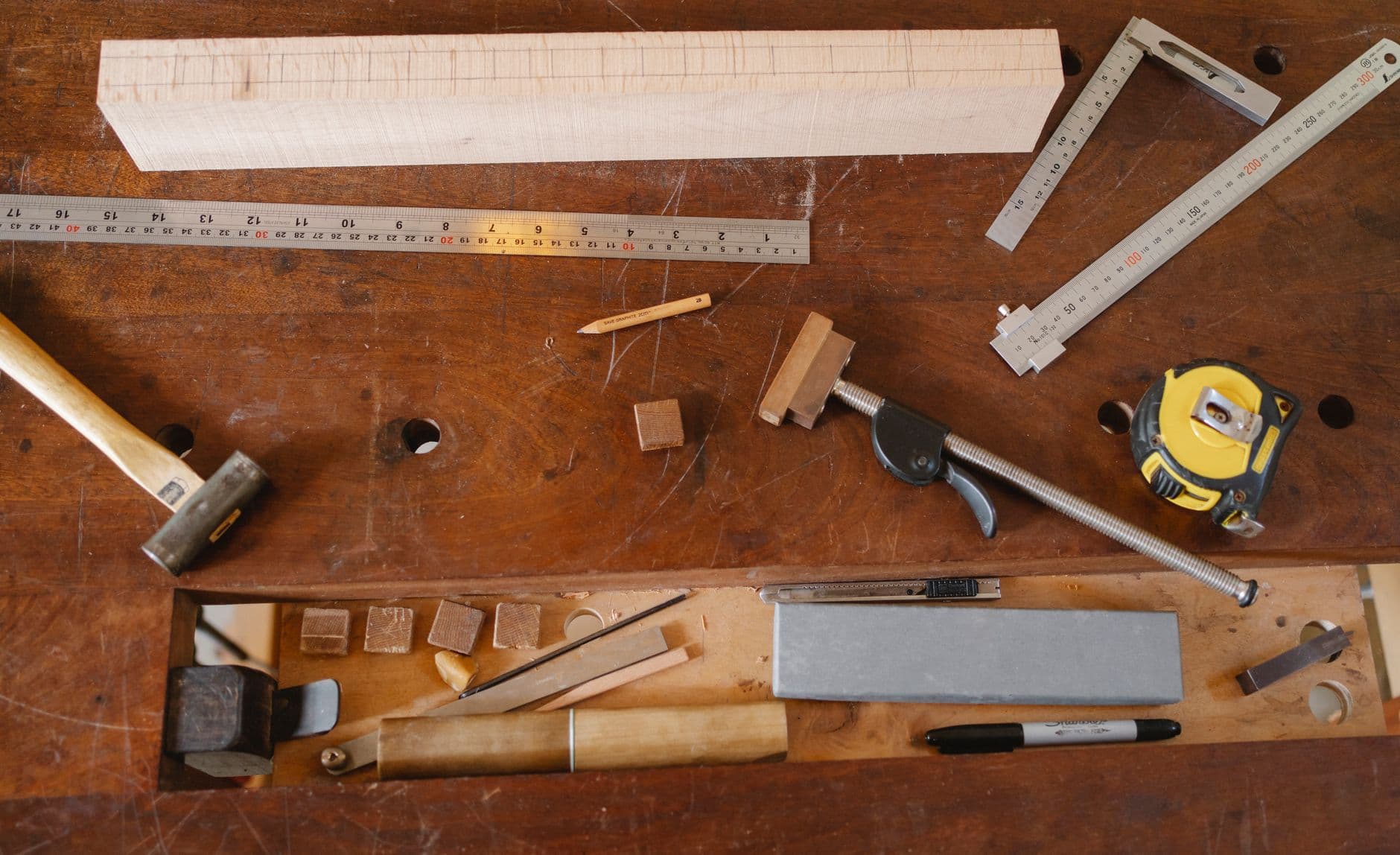
A bench top is decided by thickness, because stiffness rises with the cube of it. Most of what is sold for the job is a kitchen countertop, and half of those do not print the number.
Buy the Kreg 24 x 68 in. hardwood bench top if the budget allows: it is the only slab here sold as a bench top rather than a countertop, and it publishes thickness (1-1/2 in), species, size and weight. For a short bench on a budget, the PLAMMA 36 in. birch slab publishes the same 1.5 in thickness at a fraction of the cost.
Why thickness, and only thickness, decides this
A bench top is a beam supported at its ends and loaded in the middle, and the stiffness of a beam rises with the cube of its depth. That single relationship dominates every other property of the slab.
| Thickness | Relative stiffness | What that means in practice |
|---|---|---|
| 1 in | 1x | Budget rolling benches. Deflects visibly under a clamped workpiece. |
| 1-3/16 in | About 1.7x | The better budget benches. Noticeably steadier. |
| 1-1/2 in | About 3.4x | Purpose-built bench tops start here. The sensible target. |
| 2-1/4 in | About 11x | Serious woodworking territory. |
| 3-11/32 in | About 37x | The top of the published beech range. |
Relative stiffness against a 1 in top, from the cube relationship. Species affects denting and wear, not this.
Going from an inch to an inch and a half sounds like a fifty percent upgrade and is closer to a tripling. This is why the workbench tops reference page puts thickness first and material second, and why a slab that declines to publish its thickness has declined to be compared at all.
Quick picks
Ranked on published specifications, not on hype. The key number is the figure that decides each pick, quoted from the maker. Tap a row for the full write-up, or go straight to the listing.
| # | Product | Best for | Key number | Price |
|---|---|---|---|---|
| 1 |  Kreg 24 x 68 bench topA butcher-block slab designed and sold as a workbench top rather than a kitchen counter, and it publishes all three numbers that matter: 1-1/2 in thick, Hevea hardwood, 72 lb. The protective coating is the detail that separates it from a countertop - glue, paint and stain come off it. | The only one sold as a bench top, not a countertop | 1-1/2 inpublished thickness | $339.00 · Check on Amazon-13% |
| 2 | 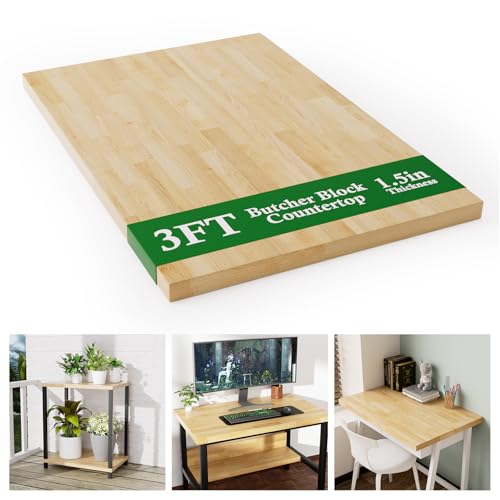 PLAMMA 36 in. birch slabA countertop slab rather than a bench top, but it publishes the thickness in the listing title - 1.5 in of solid birch, unfinished, at roughly a quarter of the Kreg. For a short bench or a machine stand, the arithmetic is hard to argue with. | Published thickness at the lowest price here | 1-1/2 inpublished thickness | $92.00 · Check on Amazon |
| 3 |  Gracava 4 ft. birch slabFour feet of solid birch at well under half the Kreg, which is the right length for a real bench. The catch is the number that matters: this listing publishes the length and the width and not the thickness, and other sizes in the same range publish 1.5 in - which is an inference, not a specification. | Bench length at countertop money | 48 x 25 inslab size | $135.99 · Check on Amazon |
| 4 |  DuraSteel 30 x 36 maple slabThe only maple slab here, and maple is meaningfully harder than birch or rubberwood - it dents less under a dropped wrench. But DuraSteel publishes neither the thickness nor the weight, so you are buying the species and guessing the stiffness. | Maple, if the species matters more than the number | 36 x 30 inslab size | $239.49 · Check on Amazon |
Every key number is a figure the manufacturer publishes. Where a maker publishes none, the row says so rather than substituting an estimate of ours.
Top pick · The only one sold as a bench top, not a countertop
Kreg Hardwood Bench Top, 24 in. x 68 in. (HWBT-6824)
A butcher-block slab designed and sold as a workbench top rather than a kitchen counter, and it publishes all three numbers that matter: 1-1/2 in thick, Hevea hardwood, 72 lb. The protective coating is the detail that separates it from a countertop - glue, paint and stain come off it.
- Body steel
- Not published
- Per drawer
- Not published
- Storage
- Not published
- Empty weight
- 72 lb
What works
- Publishes thickness, size, species AND weight - the only top on this page that publishes all four
- Sold as a bench top, so the coating expects glue and finish rather than food
- 68 in is a genuine bench length rather than a counter offcut
- Designed to pair with a published base, so the leg geometry is a solved problem
What does not
- The most expensive slab here by a wide margin
- Hevea is rubberwood - a real hardwood, but not in the same class as hard maple for dent resistance
- This SKU has no dog holes; the dog-hole version is a different part number and costs more again
- 72 lb of top is a two-person lift onto a base
| Published specification | |
|---|---|
| Thickness | 1-1/2 in |
| Size | 24 in x 68 in |
| Species | Hevea hardwood, butcher block |
| Weight | 72 lb |
| Finish | Protective coating for cleanup of glue, paint and stain |
| Dog holes | None on this version; Kreg sells a dog-hole variant separately |
| Where it is sold | Amazon, plus other retailers |
Who it is for
Someone building a bench once and wanting the top to be the part they do not worry about.
What it is not for
A budget build, or anyone who needs dog holes without drilling them.
2 · Published thickness at the lowest price here
PLAMMA 3 ft. Butcher Block Countertop, 36 x 25 x 1.5 in. Solid Birch
A countertop slab rather than a bench top, but it publishes the thickness in the listing title - 1.5 in of solid birch, unfinished, at roughly a quarter of the Kreg. For a short bench or a machine stand, the arithmetic is hard to argue with.
- Body steel
- Not published
- Per drawer
- Not published
- Storage
- Not published
- Empty weight
- Not published
What works
- Publishes the one number that decides a top, right in the title
- 1.5 in of solid birch is the same thickness as the purpose-built Kreg top
- Unfinished means you choose the finish for a workshop rather than a kitchen
- The cheapest way on this page to get a published 1.5 in under a vise
What does not
- Sold as a countertop, so there is no coating, no dog holes and no bench hardware
- No published weight, and no published flatness tolerance
- 36 in is short for a main bench - this is a machine stand or an assembly table
- Unfinished birch will move with garage humidity if it is not sealed on both faces
| Published specification | |
|---|---|
| Thickness | 1.5 in |
| Size | 36 in x 25 in |
| Species | Solid birch |
| Finish | Unfinished - sand and seal before use |
| Weight | Not published |
| Intended use | Sold as a kitchen countertop slab |
| Where it is sold | Amazon, plus other retailers |
Who it is for
A short, stiff top on a budget, for someone happy to sand and seal it themselves.
What it is not for
A full-length bench, or anyone who wants to bolt a vise on without planning for it.
Sources for this entry
3 · Bench length at countertop money
Gracava Unfinished Birch Butcher Block Countertop, 4 ft. x 25 in.
Four feet of solid birch at well under half the Kreg, which is the right length for a real bench. The catch is the number that matters: this listing publishes the length and the width and not the thickness, and other sizes in the same range publish 1.5 in - which is an inference, not a specification.
- Body steel
- Not published
- Per drawer
- Not published
- Storage
- Not published
- Empty weight
- Not published
What works
- 48 in is a usable main-bench length, not an offcut
- Solid birch rather than a veneered or particle core
- Smooth-sanded, so the prep work is finishing rather than flattening
- Costs a fraction of a purpose-built bench top of similar length
What does not
- Does not publish its thickness, which is the single figure that governs how stiff a top is
- Other sizes in this line are listed at 1.5 in, but that is a neighboring listing, not this one's spec
- No published weight and no flatness tolerance
- A countertop slab: no coating, no dog holes, no hardware provision
| Published specification | |
|---|---|
| Size | 4 ft L x 25 in W |
| Thickness | Not published on this listing |
| Species | Solid birch |
| Finish | Unfinished, smooth-sanded for oil, stain, sealant or paint |
| Weight | Not published |
| Intended use | Sold as a kitchen countertop slab |
| Where it is sold | Amazon, plus other retailers |
Who it is for
A budget bench build where you will measure the slab yourself when it arrives.
What it is not for
Anyone who needs to know the thickness before ordering - and on a bench top, that is most people.
Sources for this entry
4 · Maple, if the species matters more than the number
DuraSteel 30 x 36 in. Maple Butcher Block Countertop
The only maple slab here, and maple is meaningfully harder than birch or rubberwood - it dents less under a dropped wrench. But DuraSteel publishes neither the thickness nor the weight, so you are buying the species and guessing the stiffness.
- Body steel
- Not published
- Per drawer
- Not published
- Storage
- Not published
- Empty weight
- Not published
What works
- Maple is harder than birch, Hevea or rubberwood, and a bench top gets hit
- 30 in deep is deeper than most slabs sold at this size, which suits a bench you work at from one side
- Sold into restaurant and commercial use, where the surface takes daily abuse
- Square-ish proportions suit an outfeed table or an assembly bench
What does not
- Publishes no thickness at all - the number that decides a bench top
- No published weight either, so you cannot plan the lift or the base
- 36 in long is a machine stand, not a main bench
- Priced above the birch slabs without publishing more about itself
| Published specification | |
|---|---|
| Size | 30 in x 36 in |
| Species | Solid maple |
| Thickness | Not published |
| Weight | Not published |
| Intended use | Sold as a countertop and commercial worktable top |
| Where it is sold | Amazon, plus other retailers |
Who it is for
An assembly or outfeed table where hardness matters more than span.
What it is not for
Anyone specifying a bench on published numbers - this one publishes almost none.
Sources for this entry
How we picked
- Published thickness, or nothing. It is the governing number and it is a single line in a listing. A slab that does not publish it cannot be specified, only measured after it arrives.
- Species, and what it does. Maple is harder than birch, which is harder than Hevea and rubberwood. Hardness governs denting; thickness governs deflection. They are different problems.
- Sold as a bench top or as a countertop? A bench top expects glue, paint and stain and is coated for it. A countertop expects food and is not. Everything else about the slab can be identical.
- Length against your actual bench. Thirty-six inches is a machine stand. Forty-eight is a short bench. Sixty-eight is a bench.
- Published weight, for the lift and the base. Seventy-two pounds of top is a two-person lift and a base that has to carry it.
What we did not do
Everyone in this category says they spent seventy-five hours testing tool chests. We have not opened any of these boxes, and we say so. What we do instead: compile the published specs, convert the steel gauges, multiply out the slide ratings, cite the maker’s own listing, and show the arithmetic so you can check it. The full method, including how to challenge a figure.
Almost everything sold for this is a countertop
Search for a workbench top and most of what comes back is butcher-block kitchen countertop. That is not a trap - a solid birch or maple slab is exactly the right material, and buying one is genuinely what most people building a bench do. But the differences are worth knowing.
- Coating. A countertop is finished, or sold unfinished, for food. The Kreg's coating is specified for cleanup of glue, paint and stain, which is the workshop version of the same idea.
- Flatness tolerance. Neither publishes one, but bench tops are at least sold into an application where flatness is the point.
- Hardware provision. No countertop has dog holes, a vise mounting area or a published base to pair with. The Kreg pairs with a published base; everything else is your problem.
- Dimensions. Countertops come in counter depths - 25 in is common and generous for a bench. Lengths are cut for kitchens, which is why 36 in and 48 in are easy and 68 in is not.
Species: hardness is a separate axis
Thickness governs how much the top bends. Species governs how much it dents when a wrench lands on it. The two are independent and people conflate them constantly.
Maple is the hardest of the woods here and the reason to consider the DuraSteel slab despite it publishing no thickness at all. Birch sits below maple and well above the rubberwood family. Hevea - the species in the Kreg top - is rubberwood, a real hardwood with a real published thickness but not a dent-resistant one.
A dented bench is a working bench
Surface hardness matters less than people expect. A bench top gets marked in its first month regardless of species, and a top that flexes under a clamp is a daily annoyance in a way a dent never is. If you have to choose one, choose thickness.
What the slab does not come with
A top is half a bench. The base has to carry the weight - 72 lb for the Kreg before anything sits on it - and it has to be stiff in the direction the top is not, which is side to side. A rigid top on a racking base is a bench that moves under a plane stroke, which is the single failure mode hand-tool work cannot tolerate.
Set the height before you build, not after. The bench-height calculator works it out from your own standing height, and building the base two inches wrong is a mistake you cannot sand out.
Before you order
- Confirm the thickness is published on the listing you are buying, not on a neighboring size in the same range.
- Check whether it is finished. Unfinished is preferable for a workshop - you choose the finish, and it is usually cheaper.
- Plan the lift. A 68 in slab is two people, and a countertop slab in a cardboard sleeve has no handles.
- Seal both faces. A slab sealed on top and bare underneath will cup as humidity changes, and a garage is not humidity-stable.
- Decide on dog holes now. Drilling accurate 3/4 in holes is far easier before the top is bolted to a base.
What we would skip
A list with no losers is a list nobody edited. These are the choices we would actively steer you away from, and why.
Any slab that does not publish a thickness
This is the entire specification of a bench top. Two of the four slabs here - both of them perfectly reasonable pieces of wood - do not print it, and neighboring listings in the same product line are not a substitute for the one you are buying.
MDF, for a permanent top
It is flat, cheap and completely stable until it meets water, and then it swells irreversibly. It is an excellent sacrificial surface screwed on top of a real bench top and a poor choice as the bench top itself.
A thin top you plan to 'add a layer to later'
Two loose layers are not one thick layer. Stiffness comes from a single bonded section; two sheets that can slide against each other behave close to two separate thin sheets. If you are laminating, glue and clamp the whole face.
Finished, sealed kitchen countertops for a workshop
A food-safe oil finish is not what you want under solvent, glue and paint. Unfinished slabs are cheaper and let you choose a finish that suits a garage, which is usually a hard-wearing oil or a varnish.
The honest verdict
Buy on published thickness and treat everything else as secondary. The Kreg is the only slab here that publishes thickness, species, size and weight together, and it is priced for that. The PLAMMA gives you the same published 1.5 in for a short bench at a quarter of the money and asks you to sand and seal it yourself.
The two slabs that do not publish a thickness are not bad wood. They are simply unspecifiable, and on the one dimension that decides a bench top, that is a real objection.
Common questions
What is the best workbench top?
The Kreg 24 x 68 in. hardwood bench top on published specifications - 1-1/2 in thick Hevea butcher block, 72 lb, with a coating specified for glue, paint and stain cleanup. It is the only slab here sold as a bench top rather than a kitchen countertop, and the only one publishing thickness, species, size and weight together.
How thick should a workbench top be?
1-1/2 in is the sensible target and where purpose-built bench tops start. Stiffness rises with the cube of thickness, so 1-1/2 in is roughly three and a third times as rigid as 1 in. Published beech woodworking tops run up to 3-11/32 in, which is about thirty-seven times the stiffness of an inch.
Can you use a butcher block countertop as a workbench top?
Yes, and it is what most people building a bench actually do. Solid birch or maple is the right material. The differences are the coating - a countertop is finished for food rather than for glue and solvent - and the absence of any hardware provision or matching base. Buy unfinished where you can.
Is maple or birch better for a workbench top?
Maple is harder and dents less; birch is cheaper and usually available in longer slabs. Hardness is a separate question from stiffness, which is governed by thickness alone. If you have to choose between a thicker birch top and a thinner maple one, take the thickness.
Sources
Read next
Workbench tops: thickness first, then material
Why thickness beats material, the five surfaces compared, and the vise-mounting check that is not retrofittable.
Woodworking benches: a clamping device, not a table
Top thickness, vises and dog holes - why a woodworking bench is a clamping device rather than a table, and what the cube law does to the price ladder.
Workbench height, worked out from your own body
The elbow-height rule, a table by height and task, a calculator, and the four things that silently change the number.
Best workbenches under $300, and the one number the price cuts first
Four benches under $300 compared on published thickness, height and capacity - and why the capacity claims are the least useful number on the page.
How to choose a workbench, in the order that matters
Height first because it is the only spec about you, then top thickness, depth, and whether drawers belong in the same purchase.