Workholding
The best bench vises, and the number buyers skip
Everyone compares jaw width. The figure that decides how far into a workpiece you can clamp is throat depth, and across four vises at similar prices it ranges from 3/4 of an inch to 3-1/4.
For metalwork, the Wilton 675U - a 3-1/4 in throat, a 360 degree base and published iron grades. For a budget metal vise, the WEN BV455 publishes a clamping force (2,976 lb) but only a 3/4 in throat. For woodworking, the Jorgensen 10 in. with a published 13 in jaw opening and a quick release.
Throat depth is the spec nobody reads
Jaw width is the number a vise is sold on. Throat depth is the number that decides what you can actually do with it.
Throat depth is the vertical distance from the top of the jaws down to the screw. It sets how far in from the edge of a workpiece you can clamp before the screw is in the way. With 3/4 of an inch you are clamping the very edge of a panel. With 3-1/4 inches you can grip well inside it and work on the middle.
| Vise | Jaw width | Jaw opening | Throat | Swivel |
|---|---|---|---|---|
| Wilton 675U | 5-1/2 in | 5 in | 3-1/4 in | 360 degrees |
| WEN BV455 | 5 in | 6 in | 3/4 in | About 120 degrees |
| Jorgensen 10 in. | 10 in | 13 in | Not published | Not applicable |
| Yost F10WW | 10-1/4 in wide | Not published | Not published | Not applicable |
Published figures from each maker. The two woodworking vises do not publish a throat depth at all, which is normal for the format - they mount under the bench and the top itself sets the working height.
Four times the throat for roughly twice the money is the Wilton's whole argument, and whether it is worth it depends entirely on whether you ever clamp anything away from its edge.
Quick picks
Ranked on published specifications, not on hype. The key number is the figure that decides each pick, quoted from the maker. Tap a row for the full write-up, or go straight to the listing.
| # | Product | Best for | Key number | Price |
|---|---|---|---|---|
| 1 | 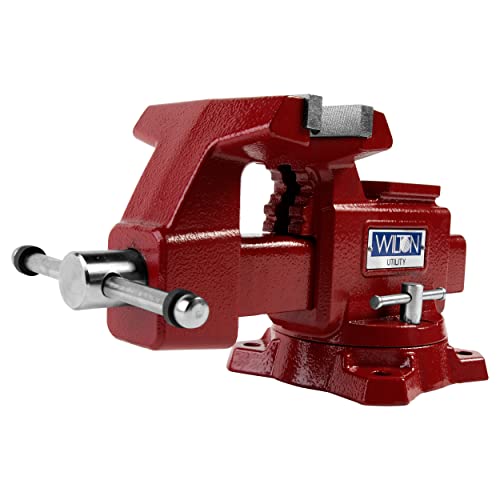 Wilton 675U 5-1/2 in.Wilton publishes what almost nobody else does - the iron itself: a 30,000 PSI gray cast iron body and movable jaw on a 60,000 PSI ductile iron base. The 3-1/4 in throat is more than four times the WEN's, which is the figure that decides how far into a workpiece you can clamp. | The deepest throat and a full 360-degree base | 3-1/4 inthroat depth | $154.99 · Check on Amazon-12% |
| 2 | 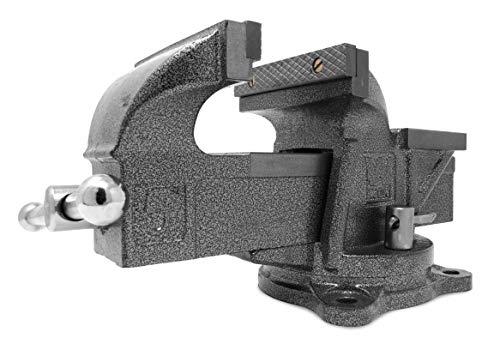 WEN BV455 5 in.The only vise here that publishes a clamping force - just under 3,000 lb - on 36,000 PSI cast iron with a 6 in jaw opening, which is an inch more than the Wilton. Read the throat depth before you buy it: at 3/4 in it is the shallowest here by a long way. | A published clamping force at a fraction of the price | 2,976 lbpublished clamping force | $62.79 · Check on Amazon |
| 3 |  Jorgensen 10 in. QRA 10 in front vise with a published 13 in jaw opening and a quick-release nut, which is the difference between winding a screw fifteen turns and slapping the jaw shut on the work. For a woodworking bench this is the format - flush jaws that take wooden faces, not serrated metal ones. | The widest jaw opening, and a quick release | 13 inpublished jaw opening | $153.99 · Check on Amazon-6% |
| 4 |  Yost F10WW 10 in.Yost publishes the parts that actually take the load: a 1-3/16 in main screw 15-1/2 in long and 3/4 in guide rods, in a cast iron body 10-1/4 in wide. No quick release, so every adjustment is wound - which is slower, and one fewer thing to wear out. | A published screw and guide-rod spec | 3/4 inguide rod diameter | $76.99 · Check on Amazon |
Every key number is a figure the manufacturer publishes. Where a maker publishes none, the row says so rather than substituting an estimate of ours.
Top pick · The deepest throat and a full 360-degree base
Wilton 675U Utility Bench Vise, 5-1/2 in. Jaw
Wilton publishes what almost nobody else does - the iron itself: a 30,000 PSI gray cast iron body and movable jaw on a 60,000 PSI ductile iron base. The 3-1/4 in throat is more than four times the WEN's, which is the figure that decides how far into a workpiece you can clamp.
- Body steel
- Not published
- Per drawer
- Not published
- Storage
- Not published
- Empty weight
- 28 lb
What works
- Publishes the tensile strength of the iron, which no other vise here does
- 3-1/4 in throat reaches deep into a workpiece - four times the WEN's 3/4 in
- 360 degree swivel with two lock-downs rather than one
- Ductile iron base, which is the part that cracks when a cast base is overloaded
What does not
- The most expensive vise here by a wide margin
- 28 lb is a real load on a thin benchtop - check the top before bolting it down
- Pipe jaws and an anvil are only useful if you actually do that work
- A metalworking vise: the serrated jaws will mark timber unless you fit soft jaws
| Published specification | |
|---|---|
| Jaw width | 5-1/2 in |
| Jaw opening | 5 in |
| Throat depth | 3-1/4 in |
| Swivel | 360 degree locking base, dual lock-downs, 4 mounting posts |
| Body | 30,000 PSI gray cast iron body and movable jaw |
| Base | 60,000 PSI ductile iron |
| Weight | 28 lb |
| Extras | Large anvil, built-in pipe jaws |
| Where it is sold | Amazon, plus other retailers |
Who it is for
A bench that will hold metal, and a buyer who wants the iron specified.
What it is not for
Woodworking, where a flush front vise is the right tool, or a lightweight bench.
2 · A published clamping force at a fraction of the price
WEN BV455 Cast Iron Bench Vise, 5 in. Jaw
The only vise here that publishes a clamping force - just under 3,000 lb - on 36,000 PSI cast iron with a 6 in jaw opening, which is an inch more than the Wilton. Read the throat depth before you buy it: at 3/4 in it is the shallowest here by a long way.
- Body steel
- Not published
- Per drawer
- Not published
- Storage
- Not published
- Empty weight
- Not published
What works
- Publishes a clamping force figure, which the other three vises here do not
- 6 in jaw opening is the widest on this page
- A quarter of the Wilton's price for a cast iron vise with an anvil
- Two-year warranty published
What does not
- 3/4 in throat depth is the shallowest here - it clamps near the edge of a workpiece only
- The base pivots about 120 degrees, not the full 360 of the Wilton
- Three mounting holes rather than four, and no second lock-down
- No published weight
| Published specification | |
|---|---|
| Jaw width | 5 in, with 3/4 in grated jaws |
| Jaw opening | 6 in |
| Throat depth | 3/4 in |
| Clamping force | 2,976 lb published |
| Body | 36,000 PSI powder-coated cast iron |
| Swivel | Pivots over 120 degrees; three 12 mm mounting holes |
| Anvil | 3.4 x 3.5 in |
| Warranty | Two years |
| Weight | Not published |
| Where it is sold | Amazon, plus other retailers |
Who it is for
General garage metalwork where price matters more than throat depth.
What it is not for
Reaching into the middle of a panel, or work that needs the base swung right round.
Sources for this entry
3 · The widest jaw opening, and a quick release
Jorgensen 10 in. Quick-Release Woodworking Vise
A 10 in front vise with a published 13 in jaw opening and a quick-release nut, which is the difference between winding a screw fifteen turns and slapping the jaw shut on the work. For a woodworking bench this is the format - flush jaws that take wooden faces, not serrated metal ones.
- Body steel
- Not published
- Per drawer
- Not published
- Storage
- Not published
- Empty weight
- Not published
What works
- 13 in of opening takes a cabinet side, not just a board edge
- Quick release turns a fifteen-turn wind into one motion
- Front-vise format takes wooden jaw faces, so it does not bruise timber
- A woodworking-specific design rather than a metal vise pressed into the job
What does not
- Publishes neither a throat depth nor a weight
- Needs to be mounted under the bench top, which means drilling and often a spacer block
- Quick-release mechanisms are the part that wears on a cheap vise
- No anvil and no pipe jaws - this does not replace a metalworking vise
| Published specification | |
|---|---|
| Jaw width | 10 in |
| Jaw opening | 13 in |
| Release | Quick release |
| Type | Front vise, for mounting under a bench top |
| Throat depth | Not published |
| Weight | Not published |
| Where it is sold | Amazon, plus other retailers |
Who it is for
A woodworking bench that needs to hold boards on edge for planing and joinery.
What it is not for
Metalwork, or anyone who cannot drill their bench top.
Sources for this entry
4 · A published screw and guide-rod spec
Yost F10WW Woodworker's Front Vise, 10 in.
Yost publishes the parts that actually take the load: a 1-3/16 in main screw 15-1/2 in long and 3/4 in guide rods, in a cast iron body 10-1/4 in wide. No quick release, so every adjustment is wound - which is slower, and one fewer thing to wear out.
- Body steel
- Not published
- Per drawer
- Not published
- Storage
- Not published
- Empty weight
- Not published
What works
- Publishes screw diameter, screw length and guide-rod diameter - the load path, specified
- Solid steel main screw in a cast iron body
- No quick release means nothing to slip or wear in that mechanism
- Costs half the Jorgensen
What does not
- Does not publish a jaw opening, which is the headline number on every competing vise
- No quick release - every adjustment is a wind
- At 19-1/4 in long it needs real clearance under the bench
- Still needs wooden jaw faces fitted to be kind to timber
| Published specification | |
|---|---|
| Vise width | 10-1/4 in |
| Length | 19-1/4 in |
| Main screw | 1-3/16 in diameter, 15-1/2 in long, solid steel |
| Guide rods | 3/4 in diameter |
| Body | Cast iron |
| Handle | T-handle, takes a wooden handle |
| Jaw opening | Not published |
| Where it is sold | Amazon, plus other retailers |
Who it is for
A bench build where you want the screw and rods specified and do not mind winding.
What it is not for
Fast repetitive clamping, or anyone who needs to know the opening before buying.
How we picked
- Throat depth. The distance from the top of the jaws down to the screw. It decides how far in from the edge of a workpiece you can clamp, and it is the spec buyers read last. It varies more than fourfold across these four.
- Jaw opening against what you hold. Five inches takes most bar stock. Thirteen takes a cabinet side. The right number depends entirely on whether this is a metal vise or a wood vise.
- Swivel range, where it exists. A full 360 degree base lets you bring the work to your body instead of walking round the bench. Some bases swivel a third of that.
- What the iron is. Two of these publish a tensile figure for the castings. That is unusually specific, and it separates a vise that bends from one that cracks.
- Metal vise or wood vise - decide first. Serrated steel jaws mark timber; flush wooden faces will not hold steel. They are not substitutes and this page covers both.
What we did not do
Everyone in this category says they spent seventy-five hours testing tool chests. We have not opened any of these boxes, and we say so. What we do instead: compile the published specs, convert the steel gauges, multiply out the slide ratings, cite the maker’s own listing, and show the arithmetic so you can check it. The full method, including how to challenge a figure.
Metal vise or wood vise
These are two different tools that share a name, and buying the wrong one is the most common mistake in this category.
| Metalworking vise | Woodworking front vise | |
|---|---|---|
| Mounts | Bolts on top of the bench | Bolts under the top, jaws flush with the edge |
| Jaws | Serrated steel - grips hard, marks timber | Flat, takes wooden faces you fit yourself |
| Opening | 5 to 6 in typical | 10 to 13 in typical |
| Extras | Anvil, pipe jaws, swivel base | Quick release, guide rods |
| On this page | Wilton 675U, WEN BV455 | Jorgensen 10 in., Yost F10WW |
A bench that does both usually carries both: a front vise at the left-hand corner for timber, and a swivel vise bolted at the right-hand end for metal. Woodworking benches covers the workholding side, where a vise is not an accessory but the reason the bench exists.
The iron, where it is published
Two vises here publish a tensile grade for the castings, which is rare enough to be worth pointing at. Wilton publishes 30,000 PSI gray cast iron for the body and movable jaw and 60,000 PSI ductile iron for the base. WEN publishes 36,000 PSI cast iron.
Why the base grade is quoted separately
Gray cast iron is stiff and brittle; ductile iron bends before it breaks. Wilton specifying a tougher grade for the base than for the body is a design statement: the base is the part that takes the leverage when you crank down on a long workpiece, and it is the part people crack.
Mounting is half the purchase
- Check the bolt pattern against your bench. The Wilton has four mounting posts and dual lock-downs; the WEN has three 12 mm holes. Neither will line up with holes you already have.
- Put the vise at a corner, not the middle of a span. A corner is supported in two directions; the middle of a top is the springiest place on the bench.
- Back a thin top with a plate. A 28 lb vise levering on a 1 in top will eventually pull through it.
- Leave the jaws proud of the bench edge on a metal vise, so long stock can hang past the bench without fouling.
- Fit wooden faces to a wood vise before the first use - that is what the tapped holes in the jaws are for.
Quick release, and whether it matters
The Jorgensen has one; the Yost does not. A quick release disengages the nut from the screw so the jaw slides freely, turning fifteen turns of winding into one motion. On a bench where the vise opens and closes a hundred times a day it is the difference between using the vise and avoiding it.
The counter-argument is mechanical: a quick release is the part that wears, and the Yost's answer is to publish the screw and guide rods instead - a 1-3/16 in main screw and 3/4 in rods. Slower, and fewer things to go wrong.
What we would skip
A list with no losers is a list nobody edited. These are the choices we would actively steer you away from, and why.
A metalworking vise for a woodworking bench
Serrated jaws bruise timber, and a vise bolted on top of the bench puts the work above the surface instead of flush with it. If you are planing board edges you want a front vise mounted under the top, not a swivel vise standing on it.
Any vise sold on jaw width alone
Jaw width is the number on the box and it tells you the least. A 5 in vise with a 3/4 in throat and a 5-1/2 in vise with a 3-1/4 in throat are not the same tool, and the second one is worth the difference.
Mounting a 28 lb vise on a 1 in top
A heavy vise on a thin bench top levers against the fixings every time you crank it. Either fit a backing plate under the top or accept that the top is now the weak point. Bench top thickness covers what the top can take.
Cheap cast bases, if you intend to load the vise hard
The base is where an overloaded vise fails. Wilton publishes 60,000 PSI ductile iron for its base specifically because that is the part that cracks. Most vises publish nothing about the casting at all.
The honest verdict
Buy the Wilton if the vise will hold metal and you want the deepest reach and the iron specified. Buy the WEN if the budget is the constraint and you clamp near the edge anyway - just go in knowing the throat is 3/4 of an inch. For timber, buy the Jorgensen for the quick release and the 13 in opening, or the Yost if you would rather have the screw and rods published and do the winding yourself.
Common questions
What is the best bench vise?
For metalwork, the Wilton 675U: 5-1/2 in jaws, a 3-1/4 in throat, a 360 degree locking base and published iron grades (30,000 PSI body, 60,000 PSI ductile base). For woodworking, the Jorgensen 10 in. quick-release front vise, with a published 13 in jaw opening.
What is throat depth on a bench vise?
The vertical distance from the top of the jaws down to the screw. It decides how far in from the edge of a workpiece you can clamp. Across the vises here it ranges from 3/4 in to 3-1/4 in - more than fourfold - which is a bigger practical difference than the jaw widths those same vises are sold on.
Can you use a metal vise for woodworking?
You can, but the serrated steel jaws will bruise timber unless you fit soft jaw covers, and a vise bolted on top of the bench holds the work above the surface rather than flush with it. For planing board edges a front vise mounted under the top is the right tool.
Is a quick-release vise worth it?
On a bench where the vise opens and closes constantly, yes - it replaces fifteen turns of winding with one motion. The trade is that the release mechanism is the part that wears. The Yost publishes its screw and guide-rod diameters instead and has nothing to slip.
How thick does a bench need to be to mount a vise?
Thicker than the budget bench tops allow, or backed with a plate. A 28 lb vise levers on its fixings every time you tighten it, and a 1 in top becomes the weak point. Our workbench top reference covers thickness against load.
Sources
Read next
Woodworking benches: a clamping device, not a table
Top thickness, vises and dog holes - why a woodworking bench is a clamping device rather than a table, and what the cube law does to the price ladder.
The best workbench tops, and the slabs that will not tell you how thick they are
Four slabs sold as workbench tops, compared on the one number that decides a bench top - and the two that decline to publish it.
Workbench tops: thickness first, then material
Why thickness beats material, the five surfaces compared, and the vise-mounting check that is not retrofittable.
How to choose a workbench, in the order that matters
Height first because it is the only spec about you, then top thickness, depth, and whether drawers belong in the same purchase.
The best garage workbenches, judged on the top and the height
Benches ranked on published top thickness and rated load, with the height calculation that decides whether any of them suits your body.