Everything that rolls
Rolling tool boxes, and the two very different things that phrase means
Half the people searching this want a case with wheels that goes in a truck. The other half want a cabinet that moves across a garage floor. The specifications that matter are not the same.

For a box that rolls to a job, the Milwaukee PACKOUT rolling tool box - the largest ecosystem and the one everything else clips onto. For a box that rolls around a shop, the Milwaukee 46 in. cabinet on published specs, or the Husky 56 in. combo if you want six casters under it. They are not competing products and you should not shortlist them together.
Two products, one search term
'Rolling tool box' covers a plastic case with a telescoping handle that costs about as much as a good drill, and a 604 lb steel cabinet that needs two people and a ramp to deliver. Both are rolling tool boxes. Almost nothing about choosing one informs choosing the other.
The split is transport versus storage. A rolling case is judged on how well it survives being moved: wheel size, shell material, whether the handle is telescoping, whether the stack stays together over a curb. A rolling cabinet is judged on the same numbers as any tool chest - body gauge, slide rating, storage volume - plus casters, which are the only rolling part of the specification.
Which half are you in?
If the box will be lifted into a vehicle, you want a case. If it will never leave the building, you want a cabinet and the wheels are a convenience rather than the point. Everything below is sorted on that basis.
Quick picks
Ranked on published specifications, not on hype. The key number is the figure that decides each pick, quoted from the maker. Tap a row for the full write-up, or go straight to the listing.
| # | Product | Best for | Key number | Price |
|---|---|---|---|---|
| 1 | 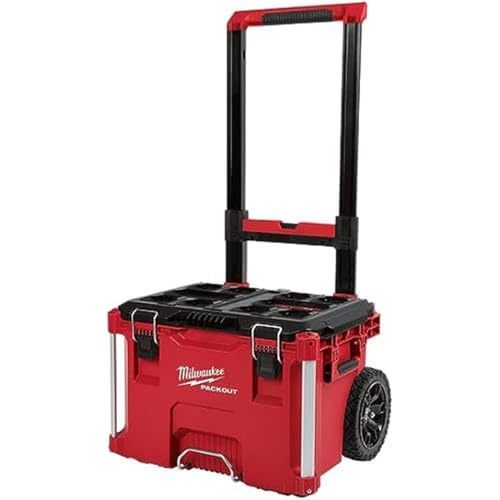 PACKOUT rolling tool boxMilwaukee publishes two capacities and both are worth knowing: 250 lb while you are rolling it, 1,000 lb standing still. Every other PACKOUT component clips to it, which is the actual product being sold. | The base of the largest modular ecosystem | 250 lbdynamic capacity | $215.00 · Check on Amazon |
| 2 | 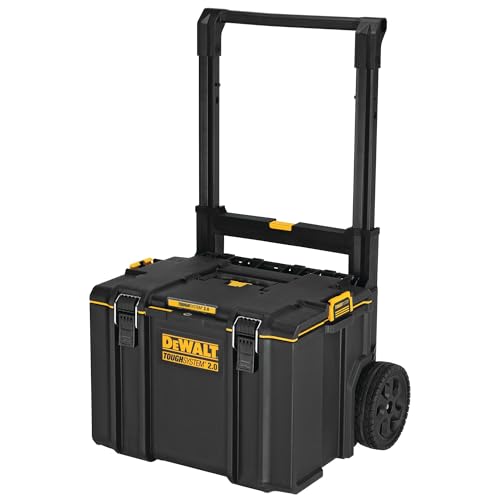 ToughSystem 2.0 rolling boxMatches PACKOUT's 250 lb and IP65 with one advantage Milwaukee cannot offer: it is backward compatible with every earlier ToughSystem box, so an existing collection is not stranded. | The PACKOUT alternative that is backward compatible | 250 lbload capacity | $125.00 · Check on Amazon |
| 3 |  Milwaukee 46 in. 8-drawer cabinetMilwaukee's standard 46-inch cabinet, not a High Capacity unit - and the distinction is worth 1,800 lb against 2,500, 20 gauge against 18, and 18 inches of depth against 22. It is the one of the two that reliably has an Amazon listing. | The 46-inch cabinet that is actually on Amazon | 1,800 lbpublished capacity | $2,600.00 · Check on Amazon |
| 4 |  StackTech XL 3-drawerDrawers rather than a lift-lid box, with 22 dividers and auto-latching. The published 50 lb capacity is per box and it is the number that decides what these are for: hand tools and fasteners, not impact sockets. | Drawers inside a modular stack | 50 lbbox capacity | $178.99 · Check on Amazon |
| 5 |  Husky 56 in. 18-drawer comboThe only widely available Amazon listing that publishes a gauge, a per-drawer rating and a total capacity at once, and the numbers hold together: 19-gauge body, 120 lb soft-close drawers, 3,000 lb rated, 604 lb empty on six 5 x 2 in casters. | The one-and-done garage upgrade | 19 gabody steel | Check price on Amazon |
| 6 |  Seville UltraGraphite 48 in.Seville publishes more about this bench than anyone else in the bracket publishes about theirs: 500 lb total, 30 lb in the drawer, a 1 in top, 83.6 lb empty and four 3 in wheels with two locking. The 1 in top is the compromise, and it is a real one. | The only one here that rolls | 500 lbpublished capacity | $259.99 · Check on Amazon |
Every key number is a figure the manufacturer publishes. Where a maker publishes none, the row says so rather than substituting an estimate of ours.
Top pick · The base of the largest modular ecosystem
Milwaukee PACKOUT Rolling Tool Box (48-22-8426)
Milwaukee publishes two capacities and both are worth knowing: 250 lb while you are rolling it, 1,000 lb standing still. Every other PACKOUT component clips to it, which is the actual product being sold.
- Body steel
- Not published
- Per drawer
- Not published
- Storage
- Not published
- Empty weight
- Not published
What works
- Publishes a dynamic AND a static capacity, which almost nobody in modular storage does
- 9 in wheels handle a gravel driveway and a curb, not just a shop floor
- The largest component range of any modular system, so the base has somewhere to grow
- IP65 means rain on a truck bed is not a problem
What does not
- 250 lb dynamic is the real ceiling and a loaded stack passes it easily
- You are buying into an ecosystem: leaving it later means replacing the whole stack
- Sold through many channels, so the Amazon listing is not always the best price
| Published specification | |
|---|---|
| Dynamic capacity | 250 lb (in motion) |
| Static capacity | 1,000 lb (stationary) |
| Wheels | 9 in all-terrain |
| Handle | 19.75 in fully collapsible |
| Weather | IP65-rated seal |
| Connection | Integrated locking cleats, compatible with all PACKOUT components |
| Where it is sold | Amazon, plus other retailers |
Who it is for
Anyone whose tools travel - job site, driveway, or a second garage.
What it is not for
A fixed garage bay, where a steel cabinet gives far more storage per dollar.
Sources for this entry
2 · The PACKOUT alternative that is backward compatible
DeWalt ToughSystem 2.0 Rolling Toolbox (DWST08450)
Matches PACKOUT's 250 lb and IP65 with one advantage Milwaukee cannot offer: it is backward compatible with every earlier ToughSystem box, so an existing collection is not stranded.
- Body steel
- Not published
- Per drawer
- Not published
- Storage
- Not published
- Empty weight
- 20.61 lb10 lb per caster, empty
What works
- Backward compatible with the older ToughSystem line, which PACKOUT is not
- Auto-connect side latches work one-handed
- Two-piece metal front latches rather than all-plastic
- 20.61 lb empty is light for the size
What does not
- 8 in wheels rather than PACKOUT's 9 in over rough ground
- Smaller accessory range than PACKOUT
- 250 lb is the whole stack, not per box
| Published specification | |
|---|---|
| Load capacity | 250 lb |
| Weather | IP65 dust and water resistant |
| Wheels | 8 in |
| Dimensions | 23-7/8 in W x 19-5/8 in L x 16-5/8 in H to lid |
| Handle | 26-5/8 in stowed, 38-7/8 in extended |
| Weight | 20.61 lb |
| Compatibility | Backward compatible with earlier ToughSystem products |
| Where it is sold | Amazon, plus other retailers |
Who it is for
Anyone already holding ToughSystem boxes, and anyone who wants IP65 on a budget.
What it is not for
A buyer starting fresh who wants the widest possible accessory range.
Sources for this entry
3 · The 46-inch cabinet that is actually on Amazon
Milwaukee 46 in. 8-Drawer Rolling Steel Storage Cabinet (48-22-8520)
Milwaukee's standard 46-inch cabinet, not a High Capacity unit - and the distinction is worth 1,800 lb against 2,500, 20 gauge against 18, and 18 inches of depth against 22. It is the one of the two that reliably has an Amazon listing.
- Body steel
- 20 ga0.0359 in (0.91 mm)
- Per drawer
- 100 lb80 lb working
- Storage
- 8.8 cu ft15,160 cu in
- Empty weight
- Not published
What works
- 1,800 lb published total capacity, which is a real figure and a good one at this width
- Angle iron reinforced frame and 5 in industrial casters, both published by Milwaukee
- Pre-cut drawer liners included, which is a genuine cost most makers push onto you
- 46 in fits a single-car bay that a 56 in box does not
What does not
- 20 gauge is 0.0359 in - the budget-default thickness, and thinner than the 18 ga High Capacity line people assume they are buying
- 18 in deep, four inches shallower than the High Capacity cabinet, so long tools sit diagonally
- Milwaukee does not publish a gauge for this model on its own page; the 20 ga figure comes from the retail listing
- 100 lb drawers rather than the 120-150 lb the wider cabinets publish
| Published specification | |
|---|---|
| Model | 48-22-8520, the standard 46 in line |
| Body steel | 20 gauge, per the Amazon listing; Milwaukee does not publish a gauge for this model |
| Dimensions | 46 in W x 18 in D |
| Drawers | 8 - four small, three medium, one large |
| Per-drawer rating | 100 lb soft close |
| Total capacity | 1,800 lb |
| Storage volume | 15,160 cu in (about 8.8 cu ft) |
| Casters | 5 in industrial, fixed and swivel, with a push handle |
| Frame | Angle iron reinforced |
| Locking | Barrel key internal locking system |
| Included | Premium pre-cut drawer liners, built-in power center |
| Where it is sold | Amazon, plus other retailers |
Who it is for
A 46-inch bay, hand tools rather than breaker bars, and a preference for buying online.
What it is not for
Anyone who wanted the 18-gauge Milwaukee. That is the High Capacity 48-22-8542, and it is a different box.
4 · Drawers inside a modular stack
ToughBuilt StackTech XL 3-Drawer Tool Box
Drawers rather than a lift-lid box, with 22 dividers and auto-latching. The published 50 lb capacity is per box and it is the number that decides what these are for: hand tools and fasteners, not impact sockets.
- Body steel
- Not published
- Per drawer
- Not published
- Storage
- Not published
- Empty weight
- Not published
What works
- Real drawers in a modular box, which most systems only do at extra cost
- 22 dividers included rather than sold separately
- Auto-latching drawers stay shut when the stack is moved
What does not
- 50 lb per box is a third of what a steel cabinet drawer pair holds
- StackTech's accessory range is far smaller than PACKOUT's
- Plastic construction: it is not a garage cabinet in a different shape
| Published specification | |
|---|---|
| Capacity | 50 lb |
| Drawers | 3, auto-latching |
| Included | 22 dividers |
| System | StackTech; the base is published at 250 lb |
| Where it is sold | Amazon, plus other retailers |
Who it is for
Small parts and hand tools that need to travel and stay sorted.
What it is not for
Heavy sockets, breaker bars or anything you would call a load.
Sources for this entry
5 · The one-and-done garage upgrade
Husky 56 in. 18-Drawer Professional Tool Chest and Cabinet Set
The only widely available Amazon listing that publishes a gauge, a per-drawer rating and a total capacity at once, and the numbers hold together: 19-gauge body, 120 lb soft-close drawers, 3,000 lb rated, 604 lb empty on six 5 x 2 in casters.
- Body steel
- 19 ga0.0418 in (1.06 mm)
- Per drawer
- 120 lb96 lb working
- Storage
- 24.8 cu ft42,876 cu in
- Empty weight
- 604 lb101 lb per caster, empty
What works
- Publishes a real body gauge, which most listings in this category simply do not
- 120 lb per drawer is genuinely usable: a full 200-piece socket set is around 24 lb
- Six casters rather than four spreads a 600 lb empty weight over more contact points
- Barrel-key locks on both the chest and the cabinet
What does not
- 604 lb empty is a two-person, ramp-and-straps delivery problem
- Husky is a Home Depot house brand, so Amazon listings are third-party and go in and out of stock
- 56 in wide plus caster overhang needs about 5 ft of clear wall
| Published specification | |
|---|---|
| Body steel | 19 gauge |
| Drawers | 18 (6-drawer top chest over a 12-drawer cabinet) |
| Per-drawer rating | 120 lb soft-close; deep bottom drawers run dual glides |
| Total capacity | 3,000 lb |
| Empty weight | 604 lb |
| Storage volume | 42,876 cu in |
| Casters | Six, 5 in x 2 in |
| Power | Two power centers, 6 outlets and 2 USB |
| Where it is sold | Amazon, plus other retailers |
Who it is for
Someone buying the last box they intend to buy for a decade, with a garage bay to put it in.
What it is not for
Anyone who needs to move the box between spaces, or who has less than five feet of wall.
Sources for this entry
6 · The only one here that rolls
Seville Classics UltraGraphite 48 in. Wood Top Workbench on Wheels with Sliding Drawer
Seville publishes more about this bench than anyone else in the bracket publishes about theirs: 500 lb total, 30 lb in the drawer, a 1 in top, 83.6 lb empty and four 3 in wheels with two locking. The 1 in top is the compromise, and it is a real one.
- Body steel
- Not published
- Per drawer
- 30 lb24 lb working
- Storage
- Not published
- Empty weight
- 83.6 lb21 lb per caster, empty
What works
- Publishes total capacity, drawer capacity, top thickness AND empty weight - the fullest disclosure in this bracket
- Full-extension ball-bearing slides on the drawer rather than friction glides
- 24 in deep, which is 4 in more usable bench than most of the budget field
- Rolls, and two locking casters mean it stops rolling when you are working
What does not
- A 1 in top is the thinnest here, and beam stiffness scales with the cube of thickness
- 37 in high is above the published elbow-height guidance for most adults doing general work
- 30 lb in the drawer is a light rating - that is a socket set and not much else
- Wheels trade rigidity for mobility; a rolling bench moves under a hand plane
| Published specification | |
|---|---|
| Size | 48 in W x 24 in D x 37 in H |
| Top | Solid polyurethane-coated wood, 1 in thick |
| Total capacity | 500 lb |
| Drawer | One steel drawer, 30 lb rated, full-extension ball-bearing slides |
| Drawer interior | 33.5 in W x 17.25 in D x 3.5 in H, with two adjustable dividers |
| Empty weight | 83.6 lb |
| Casters | Four 3 in wheels, two locking |
| Where it is sold | Amazon, plus other retailers |
Who it is for
A garage where the bench has to move out of the way of a car.
What it is not for
Hand-tool woodworking, or anything that needs a rigid, thick top at a set height.
How we picked
- Which problem is it solving? A rolling case is transport - it has to survive a truck bed and a curb. A rolling cabinet is storage that occasionally moves ten feet. Judging them against each other is the mistake this page exists to prevent.
- Wheel diameter, not wheel count. Small wheels stop dead at a threshold or an extension lead. On job-site cases the published wheel size is the single best predictor of whether the thing actually rolls where you need it.
- Published capacity, and whether it covers the wheels. A total load rating usually describes the box. Whether the casters carry that load over a door threshold is a separate question nobody publishes.
- Empty weight. On a case you lift into a truck this is the number that decides whether you buy it twice. On a cabinet it is what makes the thing stable rather than tippy.
- Does it lock to anything? The modular cases are worth more as part of a stack than alone, and the stack is the reason to pick one system over another.
What we did not do
Everyone in this category says they spent seventy-five hours testing tool chests. We have not opened any of these boxes, and we say so. What we do instead: compile the published specs, convert the steel gauges, multiply out the slide ratings, cite the maker’s own listing, and show the arithmetic so you can check it. The full method, including how to challenge a figure.
Wheels are the specification nobody reads
On a job-site case, wheel diameter decides everything. A 9 in wheel rolls over a threshold, a cable and a gravel verge. A 4 in wheel stops at all three, and then you carry a fully loaded box the rest of the way. It is the one spec where a bigger published number is unambiguously better and the one people compare least.
On a shop cabinet the question changes: not diameter but count and placement. Six casters under a 56 in cabinet spread a 604 lb empty weight over more contact points than four do, which matters on a coated garage floor and matters more when a loaded 120 lb drawer is hanging at full extension. Casters, in detail goes through swivel versus fixed, tread material and what a rated caster rating actually covers.
What each system is actually good at
| System | What rolls | The real argument for it |
|---|---|---|
| Milwaukee PACKOUT | Rolling tool box at the base of a stack | The largest range of compatible boxes, bags, organizers and racks by a wide margin |
| DeWalt ToughSystem 2.0 | Rolling box, with the DS carrier range above it | The auto-connect side latches join the stack as you set a box down |
| ToughBuilt StackTech | Rolling base with drawer units above | Actual drawers in a modular stack, which the big two mostly do not offer |
| Steel rolling cabinet | The whole cabinet, on casters | Storage volume and drawer capacity no modular case comes close to |
| Rolling workbench | A bench with a top you can work on | The only one of these that is also a work surface |
Published figures from each maker. The modular systems are covered individually in the stacking systems hub.
If the modular half is what you are after, the stacking systems roundup compares them on the numbers they publish, and how to choose a system is the one to read first, because the system decision outlasts the box decision by years.
The rolling workbench, which is a third thing again
A rolling workbench splits the difference: a work surface on casters with some storage under it. The Seville UltraGraphite here publishes more about itself than most - 500 lb total, 30 lb in the drawer, a 1 in top, 83.6 lb empty and four 3 in wheels with two locking - and the 1 in top is exactly the compromise you would expect. Stiffness in a bench top rises with the cube of thickness, so an inch is a quarter the rigidity of an inch and a half.
That is fine for assembly and wiring and not fine for hand-plane work, where a bench that moves under the stroke is worse than no bench. Rolling workbenches covers the format properly, including the two things wheels always cost you.
Before you buy, measure the route
- The doorway, at its narrowest point. Including the handle, including the caster overhang, including the trim.
- Any threshold or lip on the route, and the wheel diameter against it. This is where rolling cases fail.
- Whether the floor is sealed. Hard casters mark an unsealed slab and small hard casters mark it fastest.
- Where it stops. A cabinet needs its full width plus caster overhang plus a drawer's worth of clearance in front.
- How it is delivered. A 604 lb cabinet is a curbside drop, and the last thirty feet are yours.
What we would skip
A list with no losers is a list nobody edited. These are the choices we would actively steer you away from, and why.
A rolling cabinet with four small casters and a high center of mass
A tall box on small wheels tips when a loaded top drawer is at full extension. Six casters, or larger ones, spread the load and lower the risk. The Husky combo here runs six 5 x 2 in casters under a 604 lb empty weight for exactly this reason.
Buying a rolling case for a shop that never moves
Wheels, a telescoping handle and an impact-resistant shell are all cost, and all wasted if the box lives under a bench. In a fixed shop the same money buys considerably more drawer.
Any rolling box whose wheel size is not published
It is the cheapest spec to print and the one that decides whether the box crosses a threshold. A listing that omits it has usually omitted it for a reason.
Mixing modular systems because a box was on offer
PACKOUT, ToughSystem and StackTech cleats do not interoperate. A cheap box from the wrong system is a box you carry separately forever.
The honest verdict
Decide transport or storage first, because that decision eliminates most of the field immediately. If it is transport, pick the system rather than the box - you will own five of them eventually and they have to clip together. If it is storage, the wheels are the least important part of the specification and you should be reading the tool chest comparison instead, where the gauge and the slide rating are.
Common questions
What is the best rolling tool box?
For job-site use, the Milwaukee PACKOUT rolling tool box - it anchors the largest modular ecosystem, which is the thing that matters over years rather than the box itself. For a shop, a steel rolling cabinet like the Milwaukee 46 in. or the six-caster Husky 56 in. combo, which carry drawer capacity no modular case approaches.
Are rolling tool boxes worth it?
If the box moves, yes - wheels save your back and a telescoping handle saves two trips. If it lives under a bench and never moves, no: the wheels, the handle and the impact shell are all cost, and the same money buys substantially more drawer in a fixed box.
What size wheels should a rolling tool box have?
Bigger is unambiguously better on a job site, and the published diameter is the best single predictor of whether the box crosses a threshold, a cable or gravel. Small wheels stop dead at all three. On a shop cabinet, count and placement matter more than diameter - six casters spread a heavy empty weight better than four.
Can you mix PACKOUT and ToughSystem boxes?
No. The locking cleats are proprietary to each system and do not interoperate, so a box from the wrong system is one you carry separately forever. Pick the system before the box.
Sources
Read next
Best modular tool storage systems, on the numbers they publish
Five systems compared on published dynamic capacity, weather rating and range size, with the 50 lb versus 250 lb gap that decides it.
Rolling workbenches, and the two things wheels cost you
When wheels are worth it, the height they silently add, and the difference between a wheel lock and a total lock.
Casters: the component that decides whether the box moves
Load per caster worked out, why diameter is about obstacles rather than weight, and how to move several hundred pounds without tipping it.
The best tool chests, ranked on what the maker actually publishes
The flagship roundup: chests and cabinets ranked on published gauge, slide ratings and volume, with three things we would actively skip.
Tool chest vs PACKOUT: two answers to two different questions
Storage per dollar against portability, with the numbers laid out and one question that decides which you should buy.