Repair, not replace
Replacing a tool box drawer slide, and matching the rating it had
A drawer that drops at the front or grinds halfway out has a failed slide, not a failed box. The repair is cheap - as long as you match the length, the mount and the rating, and one of those is often unpublished.
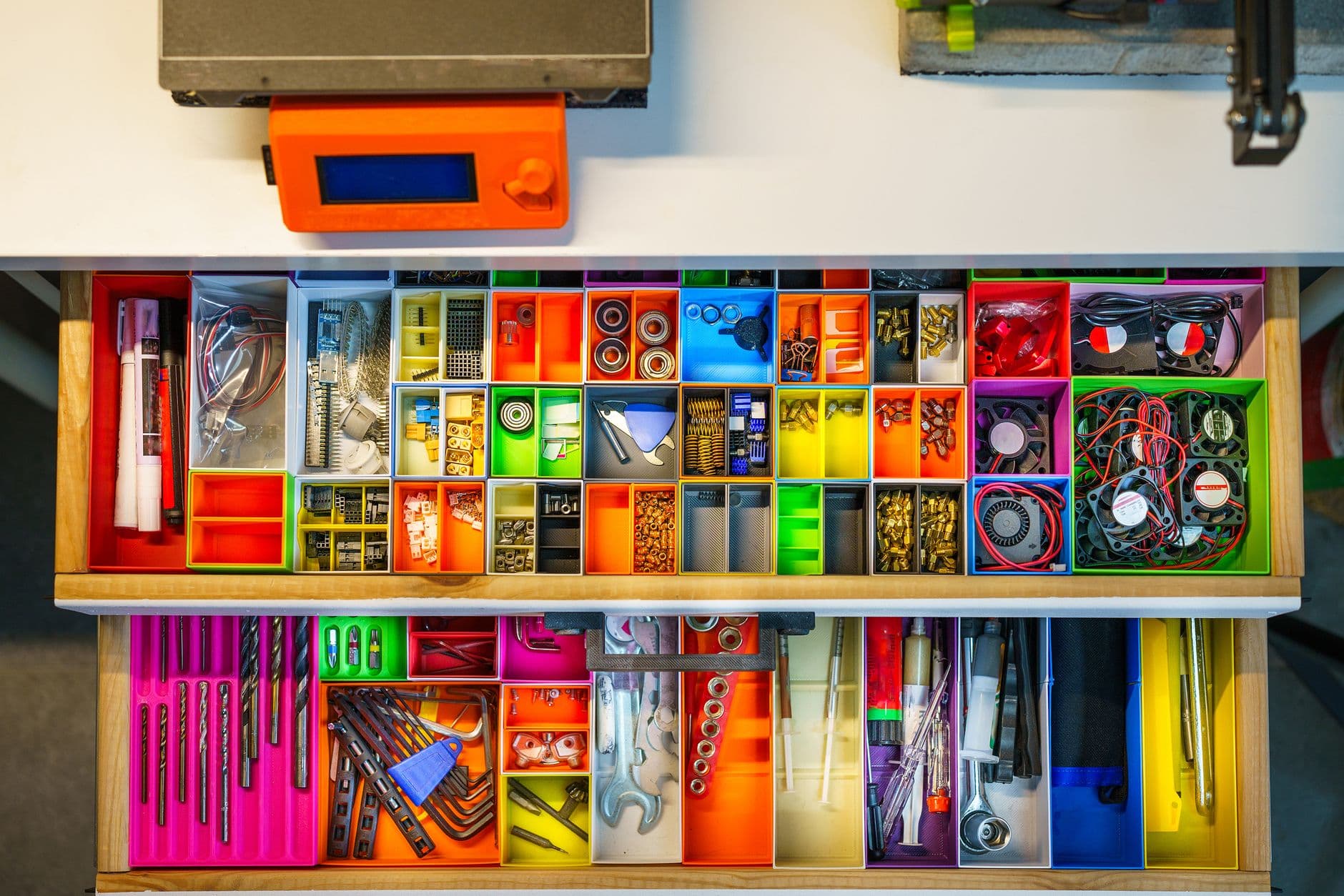
Measure the old slide, match the length, the side mount and the rating - for most mid-range tool chests that is 18 in, side mount, 100 lb per pair, which is exactly what the LONTAN plain pair publishes. Replace both slides on the drawer, not the failed one. If the chest had soft close, buy soft close or it will feel wrong forever.
What actually failed
Before buying anything, work out which of these it is, because two of them are not the slide.
- The drawer drops at the front as it opens. Ball bearings have escaped the race or the slide has bent. That is a slide, and it needs replacing.
- It grinds or sticks halfway. Bearings are damaged or the slide is contaminated with swarf. Clean it first; if it still grinds, replace it.
- It binds only when the box is full. The drawer is over its design load, not broken. Multiply the rating by 0.8 and compare it with what is in there.
- Every drawer in the cabinet binds slightly. The cabinet has racked. Check it is sitting square and level before blaming any slide.
- It closes with a bang it did not used to. The soft-close damper has failed, not the slide body.
Quick picks
Ranked on published specifications, not on hype. The key number is the figure that decides each pick, quoted from the maker. Tap a row for the full write-up, or go straight to the listing.
| # | Product | Best for | Key number | Price |
|---|---|---|---|---|
| 1 |  LONTAN 18 in. 100 lbOne hundred pounds per pair at 18 in is the exact specification most mid-range tool chest drawers are built to, which makes this the like-for-like replacement rather than an upgrade or a downgrade. Side mount, full extension, ball bearing - the three things the original almost certainly was. | Matching the rating a tool chest actually uses | 100 lbper pair, published | $18.99 · Check on Amazon |
| 2 |  LONTAN 18 in. soft closeThe soft-close version, for a chest that came with damped drawers and lost one. Soft close is not a luxury on a heavy drawer - it is what stops a loaded drawer slamming the box and, over years, wearing the stops. | Putting the soft close back | Soft closedamped closing | $31.34 · Check on Amazon-5% |
| 3 |  Probrico 18 in. soft closeThe lowest-priced soft-close pair on this page. It is sold into cabinetry rather than tool storage, which matters: a dresser drawer and a drawer full of sockets are different duty cycles, and the listing does not publish a rating that would let you tell whether this one is up to the second job. | The cheapest soft-close pair here | 18 inlength | $14.49 · Check on Amazon-16% |
Every key number is a figure the manufacturer publishes. Where a maker publishes none, the row says so rather than substituting an estimate of ours.
Top pick · Matching the rating a tool chest actually uses
LONTAN 18 in. Side-Mount Ball-Bearing Drawer Slides, 100 lb Pair
One hundred pounds per pair at 18 in is the exact specification most mid-range tool chest drawers are built to, which makes this the like-for-like replacement rather than an upgrade or a downgrade. Side mount, full extension, ball bearing - the three things the original almost certainly was.
- Body steel
- Not published
- Per drawer
- 100 lb80 lb working
- Storage
- Not published
- Empty weight
- Not published
What works
- 100 lb per pair matches what most tool chest drawers are originally rated at
- Side mount is the format almost every tool chest uses
- Sold as a pair, which is how slides are rated and how they fail
- Cheap enough to replace a whole bank of drawers
What does not
- No soft close - if the original had it, this is a downgrade in feel
- 18 in only; measure the existing slide before ordering
- Publishes no steel thickness or cycle rating
- Stock on this listing has been thin
| Published specification | |
|---|---|
| Rating | 100 lb per pair |
| Length | 18 in |
| Mount | Side mount |
| Type | Ball bearing, heavy duty |
| Supplied | 1 pair |
| Soft close | No |
| Where it is sold | Amazon, plus other retailers |
Who it is for
Replacing a failed slide in a mid-range chest with the same rating it had.
What it is not for
A drawer you intend to load harder than the original design allowed.
Sources for this entry
2 · Putting the soft close back
LONTAN 18 in. Soft-Close Ball-Bearing Drawer Slides
The soft-close version, for a chest that came with damped drawers and lost one. Soft close is not a luxury on a heavy drawer - it is what stops a loaded drawer slamming the box and, over years, wearing the stops.
- Body steel
- Not published
- Per drawer
- Not published
- Storage
- Not published
- Empty weight
- Not published
What works
- Restores the damped close a mid-range chest shipped with
- Full extension, so the back of the drawer still clears the box
- Side mount, matching most chests
- Same maker as the plain 100 lb pair, so the mounting pattern is familiar
What does not
- Does not publish a load rating, where the plain version publishes 100 lb per pair
- Soft-close mechanisms add length and can foul a shallow drawer box
- Costs roughly double the non-damped pair
- One pair per pack, so a full box is an expensive rebuild
| Published specification | |
|---|---|
| Length | 18 in |
| Type | Soft close, ball bearing, full extension |
| Mount | Side mount |
| Supplied | 1 pair |
| Load rating | Not published on the listing |
| Where it is sold | Amazon, plus other retailers |
Who it is for
A chest whose soft-close drawers are the reason you bought it.
What it is not for
Anyone who needs the load rating confirmed before ordering.
Sources for this entry
3 · The cheapest soft-close pair here
Probrico 18 in. Soft-Close Full-Extension Drawer Slides
The lowest-priced soft-close pair on this page. It is sold into cabinetry rather than tool storage, which matters: a dresser drawer and a drawer full of sockets are different duty cycles, and the listing does not publish a rating that would let you tell whether this one is up to the second job.
- Body steel
- Not published
- Per drawer
- Not published
- Storage
- Not published
- Empty weight
- Not published
What works
- The cheapest way to get soft close back on a drawer
- Full extension and ball bearing, the same construction as the tool-box slides
- Widely stocked, so replacements stay available
- Fine for light drawers - fasteners, bits, electrical parts
What does not
- No published load rating at all, and it is sold for furniture rather than tools
- A socket drawer is a far harder life than a dresser drawer
- No steel thickness or cycle figure published
- Cheap slides are the part you replace twice
| Published specification | |
|---|---|
| Length | 18 in |
| Type | Soft close, ball bearing, full extension |
| Mount | Side mount |
| Supplied | 1 pair |
| Load rating | Not published |
| Sold for | Cabinet and dresser drawers |
| Where it is sold | Amazon, plus other retailers |
Who it is for
A light drawer, or a non-critical rebuild where cost decides.
What it is not for
A heavily loaded tool drawer - use the pair that publishes 100 lb instead.
Sources for this entry
How we picked
- Match the length first. Measure the existing slide, not the drawer. 18 in is the common tool-chest length, but measure before ordering.
- Match the mount. Side mount is what almost every tool chest uses. Bottom-mount and undermount slides are cabinetry parts and will not fit.
- Match the rating, and know it is per pair. Slide ratings are published per pair at full extension, and design guidance is to run at 70-80 percent of the figure.
- Decide about soft close. If the chest came with it, a plain slide will feel like a downgrade every time that drawer shuts.
- Check whether a rating is published at all. Two of the three slides here do not publish one, and they are sold into furniture rather than tool storage.
What we did not do
Everyone in this category says they spent seventy-five hours testing tool chests. We have not opened any of these boxes, and we say so. What we do instead: compile the published specs, convert the steel gauges, multiply out the slide ratings, cite the maker’s own listing, and show the arithmetic so you can check it. The full method, including how to challenge a figure.
The rating is per pair, and most of these do not publish one
Drawer slide ratings are published per PAIR at full extension - that is the industry convention, and it is the same convention the chest makers use when they print 100 lb or 120 lb on a listing.
| Rated per pair | Working load at 80% | What that actually holds | Typical use |
|---|---|---|---|
| 75 lb | 60 lb | One socket set and not much else | Budget portable boxes |
| 100 lb | 80 lb | A socket set plus a wrench set, with room left | Mainstream chests and cabinets |
| 120 lb | 96 lb | Two socket sets, or one set plus impact sockets | Mid-tier 56 in combo sets |
| 150 lb | 120 lb | Impact sockets and a torque wrench together | The best published figure on consumer cabinets |
| 200 lb | 160 lb | A drawer you can stop thinking about | Professional cabinets |
| 250 lb | 200 lb | Power tools with batteries in | Industrial storage and enclosures |
| 500 lb | 400 lb | Anything you can physically fit in the drawer | Heavy-duty industrial slides |
Ratings are published PER PAIR of slides at full extension. The working column applies the published 80 percent design figure, which is the generous end of the 70-80 percent guidance.
Which makes the disclosure gap here awkward. Of the three slides on this page, one publishes a rating - 100 lb per pair, matching what a mid-range chest drawer was built to. The other two, both soft-close, publish none at all and are sold into cabinetry.
A dresser drawer is not a socket drawer
Furniture slides and tool slides can look identical and be built to different duty cycles. A drawer of clothes is opened twice a day and weighs a few pounds; a socket drawer is opened dozens of times a day and can hold 80 lb of steel. If a slide does not publish a rating, treat it as a light-duty part - fine for a fastener drawer, questionable under a socket set.
Measuring, and the three numbers to take
- Slide length. Measure the slide itself, fully closed, not the drawer and not the cabinet opening. 18 in is common on tool chests; 16 and 20 in both exist.
- Mount type. Look at where it bolts. Side mount fixes to the drawer side and the cabinet wall - that is almost always what a tool chest uses.
- Extension. Full extension slides let the drawer clear the cabinet completely. Three-quarter extension leaves the back of the drawer inside the box. Match what you had, or the drawer will not behave the same.
Take all three before ordering. Ball-bearing drawer slides explained covers how the ratings are arrived at and what full extension costs in capacity.
Soft close: keep it or lose it
Soft close is not a luxury on a heavy drawer. A loaded drawer slammed shut puts its whole mass into the stops, and over years that is what loosens a cabinet. If the chest shipped with damped drawers, replacing one with a plain slide means that drawer alone bangs - and you will notice it every single time.
The cost is length: a soft-close mechanism adds hardware at the back of the slide and can foul a shallow drawer box. Check the clearance behind the drawer before ordering.
Is it worth repairing at all?
Usually, yes - and this is the cheapest intervention on this site by a wide margin. A pair of slides costs a fraction of a new chest, and a chest with one bad drawer is otherwise a perfectly good chest.
The case against is when several drawers have gone at once on a cabinet that was cheap to begin with, because that is a design load problem rather than a part failure. At that point you are rebuilding a box that will keep failing, and a cabinet that publishes its slide rating is the better use of the money.
What we would skip
A list with no losers is a list nobody edited. These are the choices we would actively steer you away from, and why.
Replacing one slide of a pair
Slides are rated and they wear as a pair. Fitting one new slide against one worn one puts the drawer out of parallel, which is what caused the bind in the first place. Replace both sides of the drawer.
Cabinet slides for a heavily loaded tool drawer
A dresser drawer holds clothes; a tool drawer holds a socket set. Slides sold for furniture may be identical in construction and are not rated for the same duty, and two of the three here do not publish a rating you could check.
Upgrading the slide without checking the drawer
Fitting 150 lb slides does not make the drawer box, the drawer front or the cabinet frame able to carry 150 lb. The slide is one link. The drawer arithmetic covers what the rest of the box is doing.
Assuming the failure is the slide
A drawer that binds near the end of travel is often a cabinet that has racked - because it was moved loaded, or the floor is not level. If both slides look intact, check the box is square before buying parts.
The honest verdict
Buy the pair that publishes 100 lb if the drawer carries tools - it is the only slide here with a rating you can check against what the chest was built to. Buy a soft-close pair only if the chest had soft close, and accept that neither soft-close option here publishes a load figure. Replace both sides, measure before you order, and check the cabinet is square before you blame the hardware.
Common questions
How do I know if a tool box drawer slide has failed?
A drawer that drops at the front as it opens, or grinds and sticks partway, has a damaged slide. A drawer that only binds when full is overloaded rather than broken, and drawers that all bind slightly usually mean the cabinet has racked - check it is square and level before buying parts.
What drawer slides do tool boxes use?
Almost always side-mount, full-extension ball-bearing slides. Eighteen inches is the common length on a mid-range chest, and 100 lb per pair is the typical rating. Measure the existing slide rather than the drawer, and check the extension type - three-quarter and full extension do not behave the same.
Do I need to replace both drawer slides?
Yes. Slides are rated and wear as a pair, and fitting one new slide against one worn one puts the drawer out of parallel - which is often what caused the binding to begin with.
Can I use cabinet drawer slides in a tool box?
Sometimes, with caution. They can be identical in construction, but furniture slides are sold for a much lighter duty cycle and frequently publish no load rating at all. For a fastener drawer that is fine; under a socket set, use a slide that publishes a per-pair figure.
How much weight can a replacement drawer slide hold?
Ratings are published per pair at full extension, and published design guidance is to run at 70 to 80 percent of the figure - so a 100 lb pair is an 80 lb drawer in practice. Only one of the three slides compared here publishes a rating at all.
Sources
Read next
Ball-bearing drawer slides, and what a rating covers
How the mechanism works, why ratings are per pair at full extension, what the capacity tiers mean, and the four stages of failure.
What your drawer actually weighs, and what the box weighs full
The calculator for your own heaviest drawer, published tool weights, and the loaded-box figure no manufacturer prints.
Drawer liner: ten minutes, the whole box, do it on day one
The cheapest and first upgrade for any new chest: what sliding actually costs, and how to line a whole box in ten minutes.
The best tool chests, ranked on what the maker actually publishes
The flagship roundup: chests and cabinets ranked on published gauge, slide ratings and volume, with three things we would actively skip.
How to organize a tool chest, in the order that works
Frequency decides the height, weight decides the depth, and the buying order that puts foam last for a reason.